Manufacturing is moving through a period of major technological change, and 3D printing has become one of the most visible technologies shaping that transition. What once appeared primarily as a tool for making prototypes is increasingly being used for functional components, customized products, tooling, replacement parts, and specialized production. Instead of removing material from a solid block, additive manufacturing builds an object layer by layer from a digital design. This fundamental difference can change how companies approach product development, inventory, production planning, and even supply chains.
The growing relevance of Tech Hopes reflects the wider movement toward technologies that can make industrial production more flexible and responsive. Modern manufacturers are dealing with demands for shorter development cycles, customized products, efficient resource use, and faster responses to changing markets. 3D printing does not replace every traditional manufacturing method, but it provides capabilities that can complement conventional machining, molding, casting, and fabrication processes.
The technology is also becoming more diverse. Polymer-based printers are widely accessible, while industrial systems can work with advanced polymers, metals, composites, ceramics, and other specialized materials. As printing systems, software, materials, and quality-control processes continue to develop, businesses are exploring where additive manufacturing can deliver practical value rather than treating it simply as an experimental technology.
The Evolution of 3D Printing in Industrial Production
Early industrial applications of 3D printing were strongly associated with rapid prototyping. Engineers could transform a computer-aided design into a physical model without waiting for expensive tooling or a lengthy manufacturing setup. This allowed development teams to identify design problems earlier and test the shape, fit, and basic functionality of components before committing to large-scale production.
The role of additive manufacturing has gradually expanded beyond prototypes. Manufacturers can now produce certain end-use components directly, particularly where production volumes are limited, geometries are complex, or customization is important. This evolution has created a new manufacturing option between traditional mass production and manual fabrication. Tech Hopes can be seen in this shift toward production systems where digital designs can move more directly into physical manufacturing.
Another important development is the integration of 3D printing with digital manufacturing environments. Modern workflows can connect design software, simulation, printer management, material tracking, inspection, and production data. This creates an increasingly digital production chain in which changes to a component can be made within software and then translated into a new physical version without rebuilding conventional tooling from scratch.
Why Manufacturers Are Adopting 3D Printing
One of the strongest advantages of 3D printing is its ability to shorten the path between an idea and a physical product. Traditional manufacturing may require molds, dies, specialized fixtures, or multiple machining operations before a component can be produced. Additive manufacturing can reduce some of these requirements, particularly during early development.
For product designers, this can make experimentation more practical. A team developing an industrial enclosure, medical device component, automotive part, or robotic mechanism can produce several design variations and compare them physically. If one version fails testing, another design can be produced without necessarily creating a new mold or extensive tooling arrangement.
Tech Hopes also connects with the growing interest in flexible production. Instead of building a manufacturing process around one fixed configuration, companies can use digital files to create different versions of a component. This becomes particularly useful for industries that produce customized equipment or parts in relatively small quantities.
Reducing Development Time
Speed is particularly valuable during product development. A physical prototype can reveal issues that may not be obvious from a computer model. Components can be assembled, handled, tested, and modified repeatedly.
This iterative approach can help engineers refine dimensions, ergonomics, weight distribution, airflow, mechanical interfaces, and other characteristics before final production. The ability to make changes quickly can reduce the time between design revisions and accelerate the overall development process.
However, faster prototyping does not automatically mean faster commercialization. Materials, certification, testing, finishing, and production validation can still require significant time. The greatest benefit often comes when 3D printing is integrated into a broader engineering workflow rather than viewed as a standalone shortcut.
3D Printing and Product Customization
Mass manufacturing traditionally becomes more economical when large quantities of identical products are produced. Customization can make that model more complicated because every variation may require additional setup, tooling, or production planning.
3D printing approaches customization differently. Since the manufacturing instructions originate from a digital design, changing dimensions or geometry does not necessarily require a completely new physical tool. This makes additive manufacturing particularly interesting for personalized products and specialized industrial components.
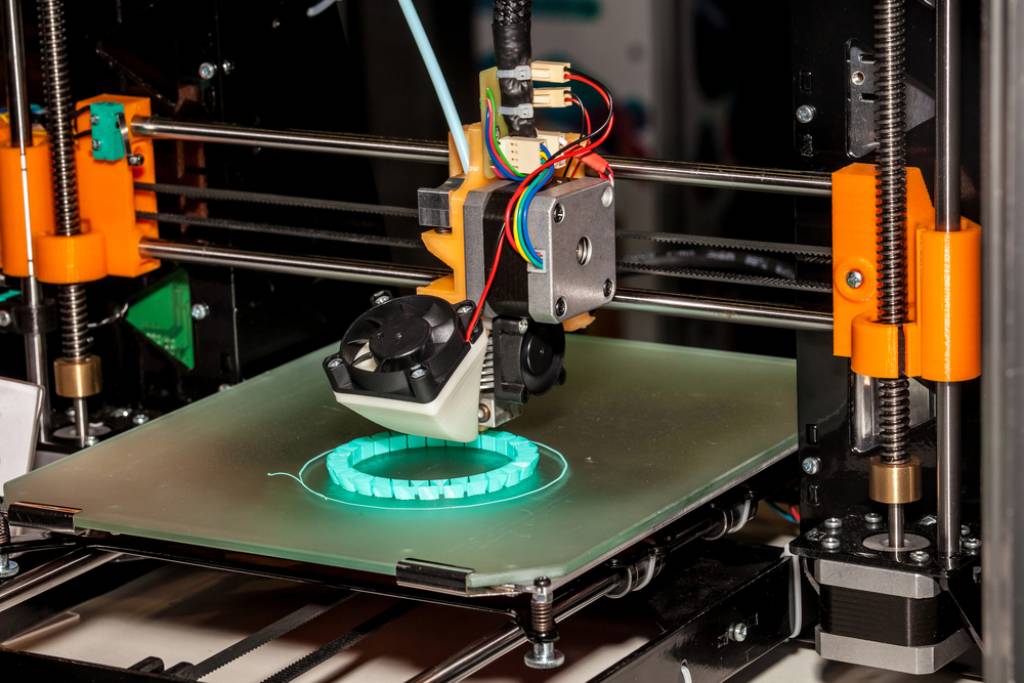
The technology can support applications ranging from customized medical devices to specialized machine components. In healthcare, for example, digital models can be adapted to individual requirements. In industrial environments, companies may manufacture replacement components or tools designed for specific machinery rather than maintaining large inventories of every possible variation.
This flexibility is one reason Tech Hopes is closely associated with digital transformation in manufacturing. The factory of the future is increasingly expected to respond to individual requirements without sacrificing efficiency wherever possible.
Materials Are Expanding the Possibilities
The usefulness of 3D printing depends heavily on materials. Early consumer systems helped popularize thermoplastic printing, but industrial additive manufacturing now includes a much broader range of material categories.
Metal additive manufacturing has become important for applications requiring strength, temperature resistance, corrosion resistance, or complex geometries. Polymer systems remain valuable for prototypes, housings, fixtures, lightweight components, and specialized products. Composite materials can provide combinations of properties that may be difficult to achieve using conventional materials.
Material development is also closely connected to industry-specific requirements. Aerospace companies may prioritize weight reduction and mechanical performance, while automotive manufacturers may focus on durability, production economics, and lightweighting. Industrial equipment manufacturers may prioritize chemical resistance, temperature stability, or dimensional accuracy.
As material libraries grow and printing processes become more controlled, manufacturers gain more options for deciding which components are appropriate for additive production.
Applications Across Modern Industry
3D printing is not limited to a single sector. Its applications vary considerably depending on production requirements, material needs, regulatory standards, and economic conditions.
The following table illustrates several areas where additive manufacturing can provide practical value:
| Industry | Common Application | Potential Production Benefit |
|---|---|---|
| Aerospace | Lightweight components and prototypes | Weight reduction and design flexibility |
| Automotive | Prototypes, tooling, custom components | Faster development and customization |
| Healthcare | Patient-specific devices and models | Personalized production |
| Electronics | Enclosures, fixtures, prototypes | Rapid design iteration |
| Industrial Machinery | Replacement parts and tooling | Flexible low-volume production |
| Construction | Experimental structures and components | Automated fabrication possibilities |
Aerospace is one of the sectors where complex geometries and weight reduction can be especially valuable. Components designed for additive manufacturing may incorporate internal structures that would be difficult or impossible to produce using conventional techniques. Reducing unnecessary material while maintaining required performance can contribute to lighter designs.
Automotive manufacturers also use 3D printing throughout development and specialized production. Engineers can create prototypes, fixtures, assembly aids, and selected components without waiting for conventional tooling. For motorsport and specialized vehicles, where design changes can occur frequently, the ability to manufacture customized parts can be particularly useful.
Healthcare presents another important application. Anatomical models can assist planning and education, while customized devices and components can be manufactured for specific requirements. Because medical applications involve strict performance and regulatory considerations, the technology must be supported by appropriate testing and quality systems.
The Role of 3D Printing in Supply Chains
Manufacturing is not only about how a component is produced; it is also about where materials and products are stored and how quickly they can reach customers. Traditional supply chains may require companies to maintain inventories of replacement parts that may not be needed for months or years.
Digital manufacturing introduces another possibility. When an appropriate part can be printed on demand, companies may be able to reduce physical inventory for selected low-volume components. Instead of storing every possible replacement part, a digital design can potentially be retained and produced when required, subject to intellectual property, quality, certification, and production considerations.
Tech Hopes becomes particularly relevant here because additive manufacturing connects physical production with digital information. A digital file can become an important production asset, allowing companies to rethink how certain spare parts and customized products are managed.
This does not mean warehouses will disappear. Many products still require conventional inventory because of production economics, regulatory requirements, material limitations, or the need for immediate availability. Instead, additive manufacturing can become another layer within a hybrid supply-chain strategy.
Improving Material Efficiency
Traditional subtractive manufacturing can remove substantial amounts of material while producing a finished component. Depending on the design, much of that removed material may become waste or require recycling.
Additive manufacturing approaches the process from the opposite direction by depositing material where it is needed. This does not mean 3D printing is automatically waste-free. Supports, failed prints, post-processing, unused powders, energy consumption, and material preparation all influence environmental performance.
Nevertheless, additive manufacturing can enable designs that use less material while retaining required structural properties. Engineers can explore lattice structures, optimized internal geometries, and lightweight forms that are difficult to create through conventional processes.
Environmental benefits therefore depend on the entire production lifecycle. Material selection, machine energy consumption, transportation, component lifespan, repairability, and recycling all need to be considered before claiming that one manufacturing method is universally more sustainable.
Challenges Facing Industrial 3D Printing
Despite its advantages, additive manufacturing has several limitations. Production speed remains an important consideration, particularly for high-volume manufacturing. A conventional injection molding system can produce large quantities of identical plastic parts rapidly once tooling is established, while 3D printing may be slower for certain production scenarios.
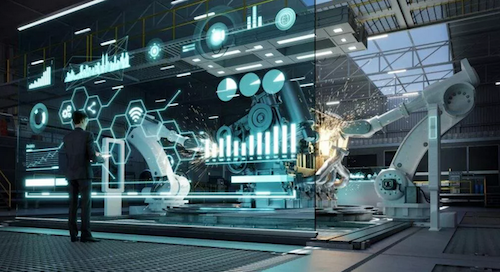
Consistency and quality control are also critical. Industrial components may require precise dimensions, predictable mechanical properties, and reliable surface characteristics. Factors such as printing temperature, machine calibration, material condition, layer parameters, and environmental conditions can affect results.
Companies considering industrial adoption commonly need to evaluate:
- Production volume and required manufacturing speed
- Material performance and availability
- Dimensional accuracy and repeatability
- Post-processing and inspection requirements
- Total cost across the complete production lifecycle
Another challenge is workforce expertise. Successful additive manufacturing requires more than purchasing a printer. Engineers and operators need to understand digital design, material behavior, process parameters, machine operation, inspection, and maintenance.
From Prototyping to Digital Manufacturing
The biggest change may be the gradual movement from isolated 3D printers toward connected digital production systems. A modern manufacturing environment can combine computer-aided design, simulation, automated production, inspection, and data analysis.
Artificial intelligence and machine learning may also contribute to this development by helping analyze production data, identify process abnormalities, optimize parameters, and support predictive maintenance. These technologies do not eliminate the need for experienced engineers, but they can provide additional information for making manufacturing processes more consistent.
Tech Hopes represents this broader technological direction, where individual innovations become more valuable when connected with other digital tools. A printer alone changes how an object is manufactured. A connected digital manufacturing system can change how products are designed, tested, produced, monitored, and updated.
Designing Specifically for Additive Manufacturing
Another important development is design for additive manufacturing, often called DfAM. Engineers do not necessarily need to reproduce a traditional component exactly as it was designed for machining or molding. Instead, they can redesign it around the strengths of additive production.
This can include consolidating several components into one printed assembly, creating internal channels, reducing unnecessary material, or introducing geometries that conventional manufacturing cannot easily produce.
The result can be more than a different manufacturing process. In some cases, additive manufacturing allows engineers to rethink the component itself.
The Future of 3D Printing in Production
The future of industrial 3D printing will likely involve a combination of additive and conventional manufacturing rather than a complete replacement of established methods. Different technologies have different economic and technical strengths, and manufacturers will continue choosing processes according to production volume, material, geometry, quality requirements, and cost.
Hybrid manufacturing is one example of this direction. A component may be additively manufactured to create a complex structure and then machined to achieve critical surface tolerances. This combination can provide capabilities that neither process offers as efficiently on its own.
Automation will also influence the next phase of additive manufacturing. Automated material handling, robotic post-processing, machine monitoring, digital inspection, and software-based production management can reduce manual intervention and improve repeatability.
As these systems mature, Tech Hopes can be understood as part of a larger industrial transformation in which manufacturing becomes more digital, flexible, data-driven, and capable of producing increasingly complex products.
Conclusion
3D printing is changing modern production by giving manufacturers a different way to approach design, prototyping, customization, tooling, spare parts, and selected end-use components. Its greatest value is not simply that it can create objects layer by layer, but that it connects physical production more closely with digital design and information. The technology still has important limitations involving speed, materials, quality control, post-processing, cost, and workforce expertise. For that reason, successful adoption requires careful evaluation rather than assuming that additive manufacturing is the ideal solution for every product.