
Battery technology has become an important part of modern life. Electric vehicles, smartphones, laptops, renewable-energy storage systems, power tools, and many other devices depend on rechargeable batteries. As demand for these technologies continues to grow, the number of batteries reaching the end of their useful lives is also increasing. This creates an important environmental challenge: how can valuable battery materials be recovered without creating another major waste problem?
Battery recycling offers one practical answer. Instead of sending used batteries directly to disposal facilities, specialized recycling processes can recover materials such as lithium, nickel, cobalt, copper, aluminum, and other components. These recovered resources can potentially be processed and used again in new batteries or other industrial applications. The idea connects closely with tech hopes because technological progress increasingly depends on finding ways to reduce resource consumption while supporting growing demand for clean-energy products.
The future of battery recycling is therefore not simply about handling old batteries. It involves developing better collection systems, safer processing methods, more efficient material recovery, and battery designs that make recycling easier. As the global energy system becomes increasingly electrified, recycling can become an important part of creating a more circular technology economy.
Why Battery Recycling Matters for Green Technology
The rapid expansion of battery-powered products has increased attention on the materials required to manufacture batteries. Mining and processing raw materials can require substantial energy, water, infrastructure, and transportation. While mining remains important for supplying materials to the battery industry, recycling can provide another source of valuable resources by recovering materials from products that have already been manufactured and used.
This is where tech hopes can be connected with the broader goal of a circular economy. Instead of treating a battery as a product with a single life cycle, recycling aims to keep useful materials circulating for longer. A battery that has reached the end of its useful life in an electric vehicle may still contain materials that have significant value. Recovering those materials can reduce the amount of material that needs to be obtained from new sources over time.
Battery recycling can also help address the growing volume of electronic and energy-storage waste. Without appropriate collection and processing, batteries can create safety and environmental concerns. Damaged lithium-ion batteries, in particular, require careful handling because they can overheat or catch fire if improperly stored or transported. Responsible recycling therefore involves both resource recovery and safe waste management.
How Modern Battery Recycling Works
Battery recycling is not a single process. Different battery chemistries and designs require different approaches. Before materials can be recovered, batteries generally need to be collected, sorted, discharged or otherwise made safe, and processed. Recycling facilities then use mechanical, chemical, thermal, or combined techniques to separate useful materials.
Mechanical processing can involve shredding and separating battery components into different material streams. Chemical approaches can then be used to extract specific metals from processed battery material. One important intermediate product is often called “black mass,” which can contain valuable elements from lithium-ion batteries. Further processing can separate and refine those elements for potential reuse.
The development of more efficient recycling technology is particularly important because battery chemistry continues to evolve. Lithium iron phosphate batteries, nickel-rich chemistries, and other designs have different material compositions. A recycling method that works efficiently for one chemistry may not provide the same results for another. Future recycling facilities will therefore need adaptable systems capable of handling increasingly diverse battery types.
From Used Batteries to Recoverable Materials
The recycling journey begins long before a battery reaches a processing plant. Collection is an essential part of the system because batteries must be recovered from vehicles, electronics, energy-storage systems, and other products. If batteries are difficult to collect or consumers do not know where to take them, valuable materials can remain outside the recycling system.
Once batteries reach an appropriate facility, they can be sorted according to chemistry, condition, size, and application. Safe handling is especially important for damaged or high-capacity batteries. After preparation, mechanical and chemical processes can separate materials that may have economic or industrial value.
Commonly recovered materials can include:
- Lithium and other battery-related minerals
- Nickel and cobalt from certain battery chemistries
- Copper and aluminum components
- Steel, plastics, and other supporting materials
The exact recovery rate depends on the battery chemistry, recycling technology, facility, and condition of the material. Improvements in these areas could make recycling more economically attractive while reducing material losses.
The Role of Battery Recycling in Electric Vehicles
Electric vehicles are one of the most visible drivers of interest in battery recycling. EV battery packs are considerably larger than the batteries used in most consumer electronics, meaning their eventual retirement could create both a challenge and an opportunity for the recycling industry.
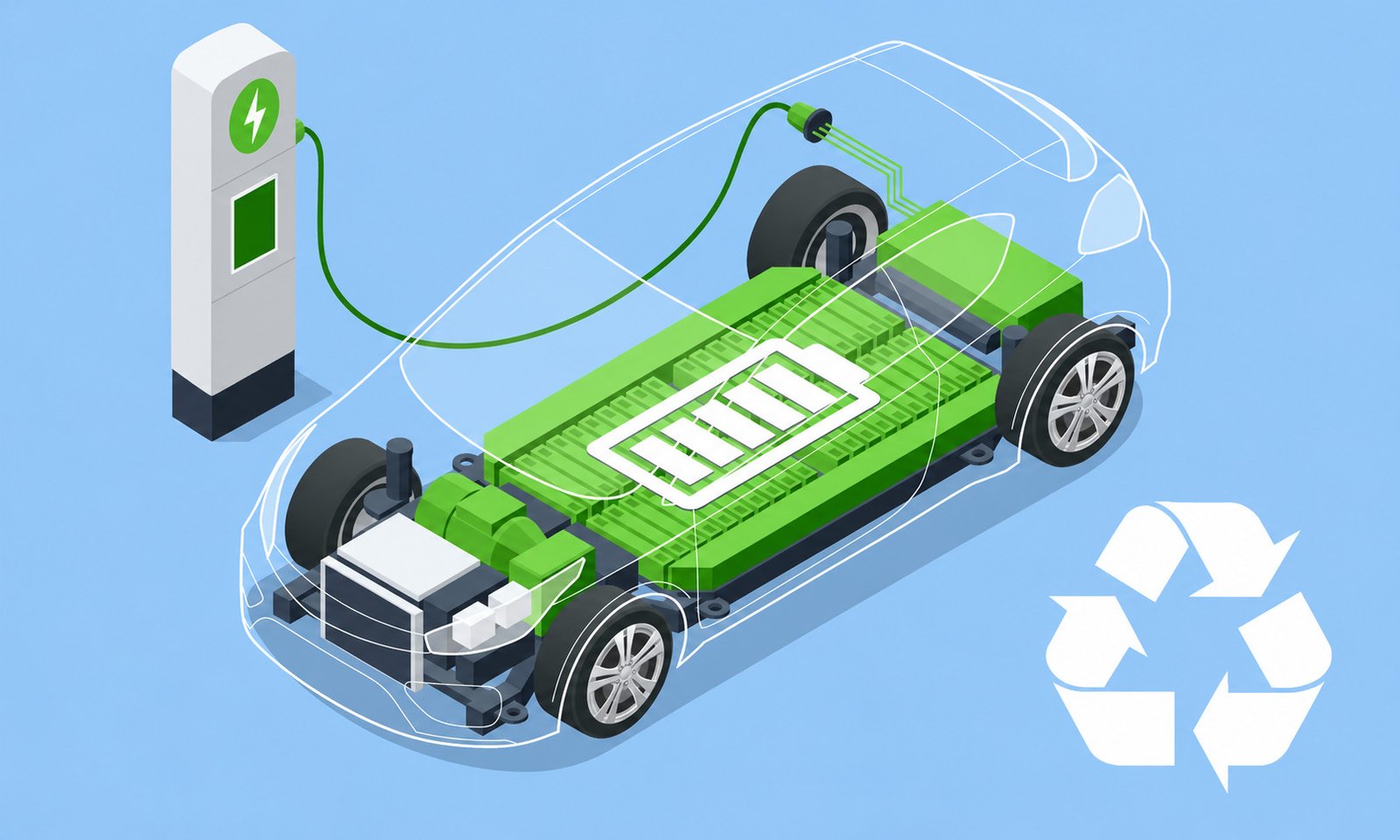
An EV battery does not necessarily become useless when it no longer provides the performance required by a vehicle. Some batteries may retain enough capacity for stationary energy-storage applications, depending on their condition and safety characteristics. This creates the possibility of a second-use stage before recycling becomes necessary.
When an EV battery finally reaches the end of its useful life, recycling can recover materials from the pack. This creates a more circular relationship between electric transportation and battery manufacturing. As tech hopes around cleaner mobility continue to develop, recycling becomes part of the larger infrastructure needed to support electrification.
The growth of EV battery recycling also encourages manufacturers to consider the entire life cycle of a battery. Designing battery packs that can be diagnosed, repaired, disassembled, reused, and eventually recycled could make future recycling systems more efficient.
Battery Recycling and Renewable Energy Storage
Renewable energy technologies create another important connection with battery recycling. Solar and wind power can produce electricity intermittently, while electricity demand does not always follow the same schedule. Battery energy-storage systems can help store electricity and release it when required.
As stationary storage expands, more batteries will eventually reach the end of their operational lives. Recycling can help recover materials from these systems rather than allowing them to become a growing waste stream.
The relationship between renewable energy and recycling is particularly significant because clean-energy technologies need sustainable supply chains. Building large amounts of energy-storage capacity requires substantial quantities of battery materials. Recycling cannot completely replace primary material production, but it can contribute to a more diversified supply system.
In this context, tech hopes are not limited to creating better batteries. They also involve developing the supporting systems that allow batteries to move through manufacturing, use, reuse, and recycling with fewer wasted resources.
Technology Innovations Improving Battery Recycling
New technologies are being developed to make battery recycling more efficient and economically viable. Advanced separation techniques, improved chemical processes, automation, robotics, and data-driven sorting systems can all contribute to better material recovery.
Automation can be especially useful in facilities handling large volumes of batteries. Identifying battery types and conditions quickly can improve sorting and reduce the risk of processing incompatible materials together. Artificial intelligence and machine-vision systems may also support automated identification of battery formats and components.
Another area of interest is direct recycling. Conventional recycling can break batteries down into raw materials that must then be processed again. Direct recycling aims to preserve certain valuable battery materials in a form that could potentially be reused more directly. If these methods become commercially practical at scale, they could reduce processing requirements and retain more of the value contained in used battery components.
| Recycling approach | Main purpose | Potential advantage |
|---|---|---|
| Mechanical processing | Separates physical battery components | Efficient initial material separation |
| Hydrometallurgical processing | Uses chemical solutions to recover materials | Can achieve high material recovery |
| Pyrometallurgical processing | Uses high-temperature treatment | Handles certain mixed battery streams |
| Direct recycling | Attempts to preserve active battery materials | Potentially retains more material value |
Challenges Facing the Battery Recycling Industry
Despite its potential, battery recycling faces several challenges. One major issue is economics. Recycling facilities require specialized equipment, trained workers, transportation networks, safety systems, and processing infrastructure. The financial value of recovered materials can also change as commodity prices fluctuate.
Collection remains another major challenge. A sophisticated recycling plant cannot recover batteries that never enter the formal recycling system. Consumers, businesses, vehicle operators, electronics manufacturers, and waste-management organizations all have roles to play in improving collection.
Battery design is also important. Some battery packs are difficult to disassemble because of adhesives, integrated components, complex structures, or safety requirements. Designing products with recycling and repair in mind could reduce these difficulties.
Safety is equally important. Lithium-ion batteries can contain significant stored energy, and damaged cells can present fire risks. Recycling systems therefore need appropriate storage, transportation, discharge, and processing procedures.
What a More Circular Battery Industry Could Look Like
A circular battery industry would connect manufacturers, consumers, collection networks, reuse businesses, and recycling facilities into a coordinated system. Batteries would ideally be tracked through their life cycle so that their chemistry, condition, ownership, and eventual destination could be better understood.
Battery passports and digital records are examples of technologies that could support this approach. Better information about a battery can make it easier to determine whether it should be repaired, reused, repurposed, or recycled. This could also improve transparency across complex supply chains.
For consumers, the process could eventually become simpler. Instead of treating an old battery as ordinary waste, people could return it through established collection programs. Manufacturers and retailers could participate by providing convenient collection points and communicating safe handling practices.
The Future of Battery Recycling
The future of battery recycling will likely depend on several technologies developing together rather than one single breakthrough. Better battery chemistry, improved manufacturing, automated sorting, advanced recycling processes, digital tracking, and stronger collection infrastructure can collectively improve the battery life cycle.
As battery demand increases, recycling could become increasingly important for manufacturers seeking reliable access to valuable materials. Recovered materials may also become an important part of domestic and regional supply chains, particularly for economies seeking to strengthen their clean-energy manufacturing capabilities.
At the same time, recycling should be viewed as one component of a broader sustainability strategy. Reducing unnecessary material use, extending product lifetimes, improving battery efficiency, repairing equipment, and designing products for disassembly can all reduce environmental pressure. The strongest tech hopes for sustainable batteries therefore involve the entire life cycle rather than focusing only on what happens after a battery stops working.
Conclusion
Battery recycling is becoming an increasingly important part of the transition toward a technology-driven and more resource-efficient economy. As electric vehicles, renewable-energy storage, portable electronics, and other battery-powered products expand, recovering materials from used batteries can help address waste while returning valuable resources to productive use. The next stage of battery recycling will depend on technological innovation as well as practical infrastructure. Better collection, safer transportation, automated sorting, advanced recovery techniques, and recycling-friendly battery design can make the system more effective. Companies and researchers are also exploring ways to recover materials with greater efficiency and preserve more of their original value.

