Introduction
Technology has become an important part of everyday life, changing how people communicate, work, study, travel, and entertain themselves. From smartphones and wireless headphones to smart home appliances and wearable devices, modern gadgets are designed to make daily activities easier and more convenient. However, the growing number of available products can make choosing the right device challenging. Every brand introduces new models with different features, specifications, prices, and performance levels. As a result, buyers need reliable information before spending their money on electronic products.
This is where Tech Hopes becomes a useful topic for people interested in understanding modern technology and exploring different gadgets. Having access to clear information about electronic devices can help consumers identify products that match their requirements. Instead of purchasing something simply because it is popular or heavily advertised, buyers can examine its practical benefits, technical capabilities, and long-term value. A thoughtful approach makes it easier to select technology that genuinely improves everyday experiences.
Modern gadgets are no longer limited to entertainment or communication. They support productivity, education, personal safety, health tracking, and household management. Understanding these developments allows consumers to make informed decisions and avoid unnecessary purchases. Whether someone is looking for a new smartphone, a laptop for professional work, or smart accessories for home use, knowing what to consider can make the buying process considerably easier.
Understanding the Growing World of Modern Gadgets
The modern gadget market has developed significantly over the last few years. Manufacturers are introducing products with improved processors, better battery efficiency, advanced cameras, intelligent software, and wireless connectivity. These improvements have changed consumer expectations. People now look for devices that offer more than basic functionality. They want products that are dependable, easy to operate, secure, and compatible with their existing technology.
Smartphones provide a good example of this transformation. Earlier devices mainly focused on calling, messaging, and basic internet access. Today’s smartphones support professional photography, video editing, online payments, gaming, navigation, artificial intelligence features, and remote working. Similarly, modern laptops are becoming more efficient through improved processors and energy-saving designs. These developments demonstrate how technology continues to combine multiple functions into compact devices.
Another important development is the growing popularity of connected gadgets. Smart televisions, wireless speakers, security cameras, smartwatches, and home automation systems can communicate through compatible networks and applications. This connectivity creates a more convenient digital environment, although consumers should also consider privacy, software support, and security before purchasing connected products.
How Tech Hopes Helps Consumers Understand Technology
Choosing an electronic device requires more than checking its appearance or brand name. Buyers should understand the specifications that influence everyday performance. For example, a smartphone with an impressive camera resolution may not necessarily produce better photographs than another model with more advanced image processing. Likewise, a laptop with a powerful processor might not be the best option for someone who mainly needs a device for browsing, writing documents, and attending online meetings.
Tech Hopes represents an approach to exploring gadgets through useful information rather than relying entirely on promotional claims. Consumers benefit from understanding how individual features work and whether they offer practical advantages. Reading about product categories, comparing specifications, and learning about common technology terms can help people develop confidence when evaluating different options.
Another benefit of technology awareness is that it encourages responsible spending. Electronic products are available across different price ranges, and expensive devices are not always necessary for every user. Someone who needs a smartphone for communication and basic applications may not require an expensive flagship model. Similarly, students may find that a reasonably priced laptop offers everything required for assignments, research, and online classes.
Popular Categories of Modern Gadgets Worth Exploring
Smartphones and Mobile Accessories
Smartphones remain among the most widely used electronic gadgets. They have become essential tools for communication, entertainment, navigation, education, and digital payments. Modern smartphones offer high-resolution displays, advanced camera systems, fast processors, larger storage capacities, and improved connectivity. Some devices also include artificial intelligence features that support photography, voice assistance, content editing, and productivity.
When choosing a smartphone, buyers should consider their primary requirements. Battery capacity matters for people who frequently travel or use their devices throughout the day. Camera quality is important for photography enthusiasts and content creators, while processing power becomes especially relevant for gaming and demanding applications. Software update policies should also receive attention because regular updates improve security and help maintain device performance.
Accessories can further improve the smartphone experience. Wireless earbuds, protective cases, charging adapters, portable power banks, and smartwatches provide additional convenience. However, compatibility and product quality should always be checked before purchasing accessories.
Laptops and Personal Computing Devices
Laptops are essential gadgets for students, professionals, business owners, and creative individuals. They support activities such as document preparation, online meetings, programming, graphic design, video editing, and entertainment. Different laptops are developed for different workloads, making it important to understand their specifications before choosing one.
For everyday productivity, a laptop with a modern processor, sufficient RAM, and fast solid-state storage can provide a smooth experience. Creative professionals may require stronger graphics capabilities, colour-accurate displays, and additional memory. People who travel frequently may prefer lightweight models with longer battery life.
Desktop computers also remain relevant, particularly for users who need powerful hardware, larger displays, and flexible upgrade options. The right choice depends on working habits, available space, portability requirements, and budget.
Smartwatches and Fitness Trackers
Wearable technology has become increasingly popular because it combines convenience with personal activity monitoring. Smartwatches can display notifications, support calls, provide navigation assistance, and track selected fitness activities. Fitness bands generally focus on everyday movement, exercise tracking, and basic wellness measurements.
Some modern wearables offer heart-rate monitoring, sleep tracking, blood oxygen estimates, and workout analysis. However, these features should be understood as consumer wellness tools rather than replacements for professional medical equipment. Accuracy can vary depending on the device, sensor quality, and how it is worn.
Before purchasing a smartwatch, consumers should check smartphone compatibility, battery life, display quality, water resistance, and available applications. A device with numerous advanced features may not provide much value if its essential functions are difficult to use.
Smart Home Devices
Smart home gadgets are changing how people manage household activities. Smart bulbs, connected plugs, security cameras, video doorbells, and intelligent speakers can simplify everyday routines. Some products allow users to control lighting, monitor rooms, or manage appliances through smartphone applications.
These devices can improve convenience, but compatibility remains an important consideration. Not every smart home product works with every operating system or automation platform. Buyers should check supported applications, connectivity requirements, privacy settings, and security updates before investing in a connected home system.
Important Features to Compare Before Buying Gadgets
Understanding technical specifications is one of the most effective ways to avoid purchasing unsuitable products. Manufacturers often advertise impressive numbers, but the practical importance of those specifications depends on the intended use. For instance, additional storage is valuable for people who keep large collections of photographs and videos, whereas display quality may matter more to someone who frequently watches movies or edits images.
Consumers should also evaluate product reliability and after-sales support. A gadget may offer excellent specifications at an attractive price, but limited warranty coverage or poor service availability can create difficulties later. Checking the manufacturer’s reputation, repair options, software support, and availability of replacement accessories can provide a better understanding of long-term ownership costs.
The following table highlights important features across common gadget categories.
| Gadget Category | Important Features | Suitable For |
|---|---|---|
| Smartphones | Battery, camera, processor, software updates | Communication and everyday activities |
| Laptops | RAM, processor, storage, display | Education and professional work |
| Smartwatches | Battery, sensors, compatibility | Fitness and daily convenience |
| Wireless Earbuds | Sound quality, comfort, battery | Music and communication |
| Smart TVs | Display technology, resolution, applications | Home entertainment |
| Smart Home Devices | Connectivity, security, compatibility | Household automation |
The Role of Artificial Intelligence in Modern Gadgets
Artificial intelligence has become an important part of the modern technology industry. Many electronic products now include AI-supported features that help users complete tasks more efficiently. Smartphones use intelligent image processing to improve photographs, while computers offer tools for writing assistance, translation, transcription, and content organisation. Smart assistants can also respond to voice commands and help users manage everyday activities.
AI-powered features are becoming more common in personal devices because manufacturers want to provide more personalised experiences. For example, some smartphones can identify subjects in photographs, improve low-light images, and suggest editing adjustments. Certain laptops support intelligent noise cancellation during video meetings, making online communication more comfortable.
However, consumers should understand that not every AI feature provides meaningful value. Some functions require an internet connection, specific software versions, or paid subscriptions. Others may process personal information, creating privacy considerations. Buyers should examine how features work, what information they collect, and whether they can be disabled when unnecessary.
Tech Hopes connects with this changing environment by encouraging people to understand technology beyond its marketing language. Learning about AI capabilities, their limitations, and their practical applications can help consumers identify genuinely useful products.
How to Choose Gadgets According to Your Lifestyle
Every individual has different technology requirements. A college student may need an affordable laptop for online classes, research, presentations, and assignments. A working professional may prioritise processing power, portability, video conferencing quality, and battery performance. Meanwhile, someone who enjoys photography might prefer a smartphone with advanced camera controls and sufficient storage.
Lifestyle should influence the purchasing decision because the most expensive gadget is not necessarily the most suitable one. People who frequently travel should consider lightweight products, durable construction, and reliable battery performance. Families may prefer devices with parental controls and straightforward interfaces, while gaming enthusiasts may prioritise processing power, graphics performance, cooling systems, and display refresh rates.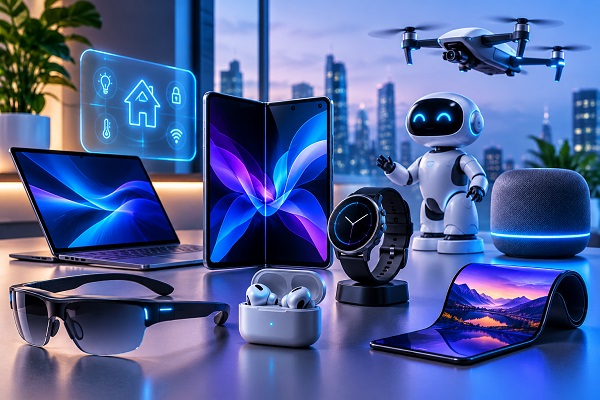
A few practical steps can make gadget selection easier:
-
Identify the main purpose of the device before comparing products.
-
Set a realistic budget that includes essential accessories.
-
Compare important specifications instead of focusing only on advertisements.
-
Check warranty coverage, software support, and customer service.
Following these steps can reduce confusion and help consumers focus on products that offer meaningful benefits.
Current Technology Trends Shaping the Gadget Industry
Faster Connectivity and Wireless Technology
Connectivity continues to influence the development of electronic products. Modern smartphones and other compatible devices support advanced wireless technologies, allowing users to access online services, transfer information, and connect accessories more efficiently. The expansion of 5G networks has also improved the possibilities for mobile internet in supported areas.
Wireless charging, Bluetooth improvements, and more reliable home networking solutions are making device connections increasingly convenient. However, actual performance depends on network availability, hardware compatibility, and service conditions. Consumers should check local network support rather than assuming that every advertised feature will work everywhere.
More Sustainable Electronic Products
Environmental awareness is becoming an important consideration in the electronics industry. Manufacturing companies are exploring recycled materials, energy-efficient components, improved packaging, and longer-lasting product designs. Some manufacturers also offer trade-in programmes and repair services to encourage responsible product use.
Consumers can contribute by avoiding unnecessary upgrades, protecting their devices, and repairing products whenever practical. Choosing electronics with longer software support can also reduce the need for frequent replacements. Sustainable purchasing does not always mean selecting the most expensive product; it often involves choosing a dependable device that meets long-term requirements.
Foldable Displays and Innovative Designs
Foldable smartphones and flexible displays represent another interesting development in consumer electronics. These devices attempt to combine portability with larger screen experiences. Users can enjoy a compact design while accessing a bigger display when needed.
Although foldable devices offer innovative functionality, buyers should consider durability, hinge construction, repair expenses, battery performance, and software optimisation. Traditional smartphones may still provide better value for people who do not need a flexible display.
Why Product Research Matters Before Spending Money
Purchasing gadgets without proper research can result in disappointment. A product may look attractive in advertisements but fail to meet practical expectations. For example, a wireless earbud may advertise impressive battery performance, yet its comfort, microphone quality, and connection stability may be more important during everyday use.
Research helps consumers identify these differences. Reading detailed specifications, checking independent reviews, and understanding warranty conditions can provide a clearer picture of product quality. It is also helpful to compare multiple models within the same price range instead of immediately selecting the first available option.
Another important factor is the total cost of ownership. Some gadgets require additional accessories, replacement batteries, subscription services, or paid applications. These expenses should be considered when evaluating affordability. A slightly more expensive product with better durability and longer support may provide greater value over time.
Through Tech Hopes, readers can approach technology research with a focus on understanding, comparison, and practical usefulness. This mindset helps buyers move beyond attractive product descriptions and concentrate on the features that genuinely matter.
Common Mistakes to Avoid When Purchasing Modern Gadgets
Even experienced technology users can make mistakes when selecting electronic products. One common problem is purchasing a device based entirely on brand popularity. Well-known manufacturers often produce reliable products, but individual models can differ considerably in performance, durability, and value. Comparing specifications and user requirements is therefore more useful than relying only on brand reputation.
Another mistake is ignoring compatibility. A smartwatch may not support every smartphone, while certain wireless accessories may offer limited functionality across different operating systems. Similarly, smart home devices may require specific applications or network configurations. Checking compatibility before making a purchase can prevent unnecessary complications.
Consumers should also avoid treating every new feature as essential. Manufacturers regularly introduce advanced functions, but many buyers only use a small percentage of the available features. Paying extra for technology that does not support everyday requirements can increase expenses without providing meaningful benefits.
Finally, buyers should not ignore security and software updates. Connected gadgets may store personal information, access online accounts, or communicate with other devices. Selecting products from manufacturers that provide dependable updates and transparent privacy controls is an important part of responsible technology ownership.
The Future of Modern Gadgets and Consumer Technology
The future of consumer electronics is likely to involve greater integration between devices, improved artificial intelligence, more efficient hardware, and increasingly personalised digital experiences. Smartphones, computers, wearable products, and household appliances are gradually becoming part of connected ecosystems. This integration can make everyday activities more convenient by allowing information and settings to work across compatible products.
Developments in battery technology, display engineering, semiconductor manufacturing, and wireless connectivity may also influence future gadget designs. Manufacturers are continuously exploring ways to improve device performance while reducing energy consumption and physical size. These developments could make advanced technology more accessible to a wider range of consumers.
At the same time, future innovation will bring important responsibilities. Data privacy, cybersecurity, electronic waste, repairability, and responsible AI usage will remain significant issues. Consumers will need to evaluate not only what a gadget can do but also how safely and sustainably it performs those functions.
For this reason, staying informed about emerging products and understanding their real-world applications will become increasingly valuable. Technology awareness can help people adapt to changes without feeling pressured to purchase every newly introduced device.
Conclusion
Modern gadgets have transformed everyday life by making communication, education, entertainment, professional work, and household management more convenient. From smartphones and laptops to smartwatches and connected home devices, consumers have access to an extensive range of products designed for different needs. However, selecting the right technology requires more than following popular trends or advertisements. Buyers should understand specifications, compare practical features, consider compatibility, and evaluate long-term reliability before making a purchase.
Tech Hopes reflects the importance of staying informed about modern gadgets and making technology-related decisions with confidence. By researching products, understanding emerging innovations, and identifying genuine requirements, consumers can avoid unnecessary spending and choose devices that offer lasting value. As the electronics industry continues to develop, informed decision-making will remain essential for getting the most out of modern technology. Ultimately, the best gadget is not always the newest or most expensive one; it is the product that fits your lifestyle, solves a genuine problem, and makes everyday activities easier.