Technology has moved from being a specialized tool used by businesses and experts to becoming part of nearly every aspect of everyday life. People now depend on smartphones, cloud services, artificial intelligence, smart devices, digital payments, online platforms, and connected systems for communication, entertainment, education, work, and decision-making. As technology continues to evolve, the biggest question is no longer simply what new devices or applications can be created. The more important question is how those innovations can make technology easier, safer, more useful, and more closely aligned with human needs. This is where Tech Hopes represents an interesting way of thinking about the future of digital innovation.
The idea behind Tech Hopes is not limited to faster processors, larger storage, or more sophisticated software. It can represent the expectations people have for technology to solve practical problems and improve daily experiences. From artificial intelligence that helps users complete complicated tasks to connected devices that anticipate household needs, the next generation of technology could become more responsive and personalized. At the same time, concerns surrounding privacy, cybersecurity, employment, misinformation, and digital inequality will influence whether these technological possibilities create meaningful progress.
Technology’s future will therefore depend on a balance between innovation and responsibility. The most successful developments are likely to be those that solve genuine problems rather than simply adding another feature to an already crowded digital environment. Understanding this shift can help businesses, consumers, educators, and technology professionals prepare for a world in which digital systems increasingly work alongside people.
What Are Tech Hopes?
Tech Hopes can be understood as the expectations, possibilities, and ambitions surrounding the future of technology. It describes the belief that innovation can improve the way people work, communicate, learn, travel, manage information, and interact with digital services. These hopes may involve artificial intelligence becoming more useful, devices becoming easier to operate, online services becoming more secure, and technology becoming accessible to a wider range of people.
However, technology-related hopes are not necessarily predictions that every new invention will succeed. They are better viewed as potential directions for development. For example, people may hope that AI will reduce repetitive administrative work, that smart homes will become more energy efficient, or that digital healthcare systems will make important information easier to access. Turning these possibilities into practical outcomes requires careful design, reliable infrastructure, appropriate regulation, and a strong understanding of human behavior.
Artificial Intelligence Could Become More Personal
Artificial intelligence is likely to be one of the most influential forces shaping how people interact with technology. Earlier generations of digital software generally required users to learn commands, menus, and workflows. Modern AI systems are increasingly capable of understanding natural language, interpreting context, generating content, analyzing information, and assisting with complex tasks. This could gradually change the relationship between people and software from direct operation toward collaboration.
Instead of opening several applications and manually transferring information between them, users may increasingly describe what they want and allow intelligent systems to coordinate multiple steps. A person might ask an AI assistant to organize information, compare options, prepare a draft, summarize documents, or create a personalized plan. The quality of these experiences will depend heavily on accuracy and transparency. If AI becomes more capable while remaining understandable and controllable, it could remove significant friction from everyday digital activities.
From Tools to Intelligent Assistants
The transformation will be particularly noticeable as AI moves beyond isolated applications. An intelligent assistant could potentially understand a user’s objective, identify the tools required, and help complete a workflow. This could affect professional environments as well as personal technology.
For businesses, AI could support customer service, research, data analysis, marketing, software development, and internal operations. For consumers, it could help with planning, learning, shopping decisions, travel preparation, and household management. Rather than replacing every conventional application, AI may increasingly become the layer that connects different digital tools and makes them easier to use.
Smart Devices Could Become More Context-Aware
Connected devices are another major area where technological expectations could become reality. Smartphones, watches, televisions, appliances, vehicles, security systems, and other Internet-connected products already exchange information. The next stage could focus less on simply connecting devices and more on enabling them to understand context.
A smart home, for example, could adjust lighting, temperature, energy usage, and security settings according to household activity. A wearable device could provide more meaningful information by combining different measurements instead of presenting isolated numbers. Vehicles could increasingly use sensors and intelligent software to understand road conditions and driver behavior. The objective would be to make technology feel less like a collection of separate gadgets and more like an integrated environment.
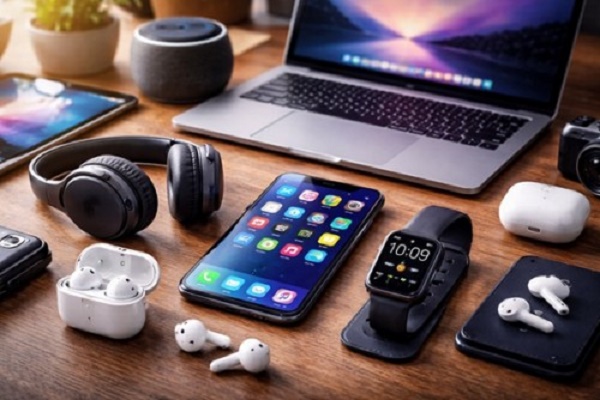
This development also introduces important concerns. More connected devices mean more information being collected and transmitted. If manufacturers prioritize convenience without giving sufficient attention to security and privacy, the same systems designed to improve daily life could introduce new vulnerabilities. Future innovation therefore needs to combine connectivity with strong protection of personal information.
Technology Could Become More Human-Centered
One of the most important changes in future technology may involve the way products are designed. For many years, consumers were expected to adapt to technology. People had to learn complicated interfaces, remember passwords, understand settings, and troubleshoot unfamiliar systems. A more human-centered approach would reverse this relationship by making technology adapt more effectively to users.
Voice interaction, natural-language interfaces, accessibility tools, personalized recommendations, and adaptive interfaces can all contribute to this change. Technology could increasingly recognize different abilities, preferences, and circumstances without forcing everyone to interact with software in exactly the same way. This could make digital products more useful for older adults, people with disabilities, inexperienced users, and professionals working across multiple environments.
The future of Tech Hopes therefore involves more than technological sophistication. A highly advanced system is not necessarily valuable if ordinary users find it confusing. Simplicity, accessibility, reliability, and trust may become as important as processing power or technical specifications.
Automation Could Change the Modern Workplace
Automation has already transformed manufacturing, logistics, finance, retail, and customer service. Artificial intelligence and advanced software could accelerate this transformation by automating more knowledge-based activities. This does not necessarily mean that every automated task will eliminate a human role. In many cases, technology can take over repetitive processes while employees concentrate on judgment, creativity, communication, and problem-solving.
For example, an organization might use automation to sort large volumes of information, generate routine reports, monitor operational systems, or handle repetitive customer inquiries. Employees could then spend more time dealing with unusual cases and strategic decisions. The result could be a workplace where humans and intelligent systems divide responsibilities according to their strengths.
| Technology Trend | Potential Impact | Key Challenge |
|---|---|---|
| Artificial intelligence | Faster analysis and personalized assistance | Accuracy and responsible use |
| Smart devices | More convenient connected environments | Privacy and security |
| Automation | Reduced repetitive work | Workforce adaptation |
| Digital identity | Easier online verification | Data protection |
| Immersive technology | More interactive experiences | Cost and accessibility |
The workforce will need to adapt alongside these developments. New technical skills will be valuable, but communication, critical thinking, creativity, and the ability to evaluate AI-generated information will also become increasingly important. Companies that invest in training rather than treating automation solely as a cost-cutting strategy may be better positioned to benefit from technological change.
Privacy and Security Will Shape Future Innovation
As digital technology becomes more integrated into everyday life, privacy will become an increasingly important part of product design. Devices and online services can collect information about locations, preferences, purchases, communications, behavior, and interactions. While such information can improve personalization, it can also create risks when collected unnecessarily or protected poorly.
Future technology users are likely to demand greater control over their information. Businesses may need to explain more clearly what data they collect, why they collect it, how long it is retained, and who can access it. Security will also need to move beyond passwords toward stronger combinations of authentication, encryption, device protection, and behavioral safeguards.
Some of the most meaningful Tech Hopes may therefore involve technology that gives users greater control rather than simply collecting more information. Privacy-focused design could become an important competitive advantage as consumers become more aware of the value and risks associated with their digital identities.
Digital Accessibility Could Expand
Technology has the potential to reduce barriers that previously prevented many people from participating fully in digital society. Screen readers, speech recognition, automatic captions, translation systems, adaptive interfaces, and other accessibility technologies are already helping users interact with digital content in different ways.
Future systems could make accessibility more seamless by adapting interfaces according to individual requirements. AI-powered translation and speech tools could also help people communicate across languages and abilities. In education and employment, these developments could open opportunities for people who have historically faced limitations when using conventional digital systems.
The challenge will be ensuring that accessibility is considered during the design stage rather than added as an afterthought. Affordable access will matter as well. A breakthrough technology that is available only to a small group of wealthy users cannot deliver broad social benefits.
Immersive Experiences Could Redefine Digital Interaction
Virtual reality, augmented reality, spatial computing, and other immersive technologies could change the way people interact with digital information. Instead of viewing everything through a traditional flat screen, users may increasingly interact with three-dimensional information placed within physical or virtual environments.
These technologies could have applications beyond gaming and entertainment. Students could explore virtual environments as part of education. Engineers could examine digital models before building physical products. Remote teams could collaborate in more interactive spaces. Retailers could allow customers to visualize products within their surroundings before purchasing them.
However, widespread adoption will depend on comfort, affordability, useful applications, and ease of use. Immersive technology must provide a clear benefit rather than requiring consumers to purchase expensive equipment simply for novelty. Its long-term value will depend on whether it can improve experiences that existing technologies cannot address as effectively.
Sustainability Could Become a Technology Priority
The rapid expansion of digital infrastructure has created new environmental challenges. Data centers require substantial energy, electronic devices consume resources, and discarded hardware contributes to electronic waste. As digital services continue expanding, technology companies will face increasing pressure to improve efficiency and reduce environmental impact.
Future innovation could focus on energy-efficient processors, renewable-powered infrastructure, longer-lasting devices, repairable hardware, intelligent energy management, and better recycling systems. Smart technology could also help households and businesses understand and reduce unnecessary energy consumption.
Sustainability may become a defining part of responsible innovation. The strongest technology strategy will not simply ask whether something can be built but whether it can be built efficiently and maintained responsibly over its entire lifecycle.
How Technology Could Change Everyday Life
The effects of emerging technology may be most visible in ordinary routines. People could use AI to organize schedules, smart systems to manage household resources, connected transportation services to simplify travel, and personalized educational platforms to learn at their own pace. Digital services may become increasingly proactive, helping users identify information or complete tasks before they need to search manually.
At the same time, people will still need to make decisions about how much technology they want in their lives. Convenience can become problematic when constant notifications, recommendations, and automated interactions reduce attention or independence. The goal should not be maximum technology adoption. Instead, future systems should help people use technology intentionally.
This is one reason Tech Hopes should be viewed through a human-centered perspective. The best digital future is not necessarily one in which technology controls more aspects of life. It may be one in which technology handles complexity quietly while people retain meaningful control over important decisions.
Challenges That Could Limit Technological Progress
Although the future offers considerable possibilities, technological development will not happen without obstacles. Cybersecurity threats can become more sophisticated as digital systems become more interconnected. AI-generated misinformation could make it harder to distinguish reliable information from fabricated material. Unequal access to high-speed connectivity and advanced devices could widen existing digital divides.
There are also questions about regulation, employment, intellectual property, data ownership, and accountability. When an automated system makes a harmful decision, determining responsibility can be difficult. Governments, technology companies, researchers, and users will need to establish practical frameworks for managing these risks.
Some key challenges include:
- Protecting personal information as connected services expand.
- Developing reliable and transparent artificial intelligence.
- Ensuring people can access useful technology regardless of income or ability.
- Helping workers develop skills for increasingly automated workplaces.
- Reducing the environmental impact of digital infrastructure.
The Future Will Depend on Responsible Innovation
Technological progress should ultimately be measured by the value it creates for people. A faster device, smarter algorithm, or more connected platform matters only when it addresses a genuine need. Responsible innovation means considering security, accessibility, sustainability, affordability, and social consequences alongside technical performance.
Companies that understand this principle may have an advantage in the future. Consumers are increasingly interested not only in what products can do but also in how those products handle personal data, how durable they are, and whether they genuinely improve everyday experiences. Trust could become one of the most important currencies in the technology industry.
The strongest Tech Hopes will be those that combine ambitious innovation with realistic responsibility. Instead of pursuing technology simply because it is possible, developers can focus on building systems that are useful, understandable, secure, and inclusive.
Conclusion
The future of technology is likely to be defined by more than faster devices and increasingly powerful software. It will involve a deeper transformation in how people interact with digital systems. Artificial intelligence could make software more conversational, smart devices could become more context-aware, automation could reshape professional workflows, and immersive technologies could create new ways to learn and collaborate. At the same time, privacy, cybersecurity, sustainability, accessibility, and digital equality will determine whether these developments benefit society broadly.
The central idea behind Tech Hopes is ultimately about possibility. Technology can make everyday activities simpler, help people access information, support businesses, improve productivity, and create new forms of communication. But achieving those outcomes requires responsible choices from developers, organizations, policymakers, and users.