Technology is entering a period in which innovation is no longer defined simply by launching faster devices or more powerful software. The bigger transformation is happening through the convergence of artificial intelligence, cloud infrastructure, automation, cybersecurity, advanced computing, robotics, and connected digital systems. In 2026, organizations are increasingly looking beyond individual technologies and focusing on how multiple systems can work together to create practical value. Current technology research points toward AI-native development, multi-agent systems, physical AI, confidential computing, digital provenance, and stronger cybersecurity as important parts of the emerging digital landscape.
This changing environment explains why Tech Hopes have become closely connected with expectations about productivity, business growth, smarter services, and more personalized digital experiences. The most important question is no longer whether technology will change the way people work and live, but how responsibly and effectively that change will be managed. From AI agents capable of handling complex workflows to intelligent machines operating in physical environments, emerging innovation is gradually moving from experimentation toward real-world implementation.
The opportunity is significant, but it is not without challenges. Digital transformation requires reliable infrastructure, skilled people, strong privacy practices, cybersecurity, responsible AI governance, and sustainable investment. As technology becomes more autonomous and interconnected, organizations must make sure innovation remains trustworthy and understandable. The future therefore depends not only on what technology can do, but also on how thoughtfully people choose to use it.
Why Emerging Digital Innovation Matters Today
Digital innovation has traditionally followed a pattern in which one major technology creates a new market and eventually becomes part of everyday infrastructure. Smartphones, cloud computing, broadband connectivity, and mobile applications all followed versions of this journey. The current wave is different because several technological developments are advancing simultaneously. Artificial intelligence is becoming embedded in software, cloud platforms are being redesigned around AI workloads, connected devices are producing enormous quantities of data, and automation is moving beyond simple repetitive tasks.
This convergence is making technology more influential across almost every industry. Businesses can use intelligent systems to analyze information, automate operations, personalize customer interactions, detect unusual activity, and support decision-making. Governments can use digital infrastructure to improve public services, while manufacturers can combine sensors, robotics, analytics, and AI to create more responsive production environments. India is also expanding its emerging technology ecosystem through investments and initiatives involving AI, semiconductors, quantum technologies, supercomputing, cloud computing, and cybersecurity.
The significance of Tech Hopes therefore extends beyond individual gadgets or applications. It represents a broader expectation that technology can solve difficult problems and create new opportunities. However, expectations must be balanced with realistic planning. A promising technology may fail to deliver meaningful results if organizations lack appropriate data, infrastructure, security controls, or employees capable of managing it.
Artificial Intelligence Is Moving From Assistance to Action
Artificial intelligence remains one of the strongest forces behind digital innovation. Earlier generations of AI applications were commonly designed to answer questions, recognize patterns, recommend content, or generate text and images. The emerging direction is more autonomous. Agentic AI systems are increasingly being designed to interact with software, coordinate tasks, retrieve information, and support business processes with less continuous human intervention. Current industry analysis describes this transition as a movement from generative AI toward systems that can take actions within defined workflows.
This change could significantly affect how companies design software. Instead of employees manually moving information between multiple applications, an AI agent could potentially coordinate several steps within an approved workflow. A sales system, for example, could analyze customer information, prepare a follow-up message, update a record, and recommend the next action. In software development, AI-native tools can help developers describe desired outcomes while automated systems assist with code generation, testing, and maintenance.
The promise is substantial, but autonomy introduces additional responsibility. An AI system with access to business applications can potentially make mistakes at a larger scale than a simple chatbot. Organizations therefore need permissions, monitoring, human oversight, audit trails, and clear boundaries around what an AI system is allowed to do. The future of AI will depend as much on governance and integration as on model intelligence.
Multi-Agent Systems and Intelligent Workflows
Another emerging direction is the development of multi-agent systems in which specialized AI agents cooperate on complex tasks. Instead of asking one system to perform everything, different agents can potentially handle research, analysis, planning, verification, and execution. Gartner identifies multi-agent systems among its major strategic technology trends for 2026.
This approach could change enterprise automation. A company might use one agent to monitor incoming information, another to analyze business data, and another to prepare operational recommendations. Human employees would remain important for judgment, accountability, and strategic decisions, while AI systems could manage increasingly complicated digital workflows.
The challenge is coordination. If several automated systems interact, organizations need mechanisms to verify information, prevent unauthorized actions, and resolve conflicting decisions. This means future digital infrastructure may need to treat AI agents as managed participants within an organization’s technology environment rather than simply as standalone applications.
Cloud Computing Is Becoming More Intelligent
Cloud computing has already transformed how organizations store data, operate applications, and scale digital services. The next stage is increasingly influenced by artificial intelligence. AI workloads require specialized computing resources, high-performance infrastructure, large-scale data processing, and efficient networking. As a result, cloud platforms are becoming increasingly important to the AI economy.
This evolution is also encouraging organizations to reconsider where data and workloads should be processed. Cost, latency, privacy, regulatory requirements, resilience, and energy consumption can all influence infrastructure decisions. Some workloads may remain in centralized cloud environments, while others may increasingly use edge computing or local infrastructure for faster responses.
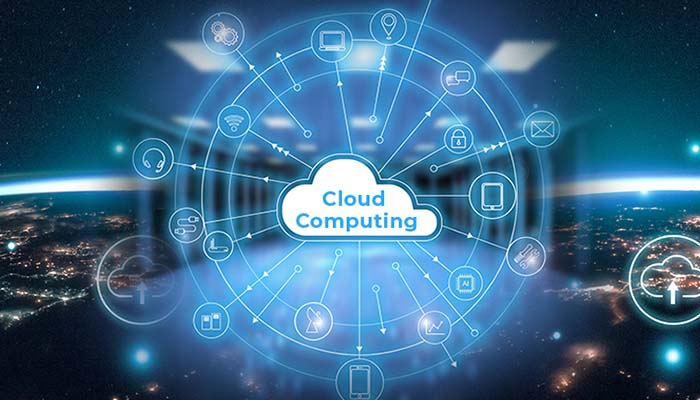
The expansion of AI infrastructure is particularly significant in India. Recent industry reporting indicates that India’s data-center capacity is expanding rapidly as AI demand and data-localization requirements increase. This development demonstrates how digital innovation depends on physical infrastructure. Powerful applications require data centers, networks, electricity, cooling systems, semiconductor hardware, and skilled professionals.
Edge Computing and Real-Time Digital Services
Cloud computing is not the only answer to future digital workloads. Edge computing allows data processing to happen closer to the location where information is generated. This can be useful for connected vehicles, industrial equipment, smart cities, healthcare systems, security technologies, and other applications where response time matters.
Imagine a factory where cameras and sensors continuously monitor production equipment. Sending every piece of information to a distant data center may introduce unnecessary delays. Edge systems can process selected information locally and send important results to centralized platforms. This combination of cloud and edge computing can provide both centralized intelligence and rapid local responses.
Such architectures are likely to become more important as billions of connected devices generate increasingly complex data. The combination of edge processing, cloud infrastructure, AI models, and high-speed connectivity could create digital environments that respond almost immediately to changing conditions.
Physical AI Is Bringing Intelligence Into the Real World
One of the most interesting developments in emerging technology is the movement of AI from screens into physical environments. Robots, autonomous machines, drones, intelligent vehicles, and smart equipment are becoming increasingly connected with AI systems. Forrester’s 2026 emerging-technology research highlights the shift of AI into physical environments as a major development, with applications involving robots, vehicles, and ambient experiences.
Physical AI could influence industries such as manufacturing, logistics, agriculture, transportation, construction, and warehousing. A robot equipped with sensors and intelligent software can potentially respond to changing surroundings rather than simply repeating a fixed sequence of movements. This makes machines more adaptable and opens possibilities for automation in environments that were previously difficult to automate.
Cybersecurity Must Grow Alongside Innovation
Every new digital capability also creates new security considerations. As businesses connect more devices, applications, AI agents, cloud services, and third-party platforms, the attack surface becomes increasingly complicated. Artificial intelligence can help security teams identify unusual patterns and respond to threats, but attackers can also use AI to make their operations more sophisticated.
The World Economic Forum’s 2026 cybersecurity research emphasizes that AI is reshaping both offensive and defensive cybersecurity. Organizations are therefore facing a dual challenge: adopting AI while also protecting themselves against AI-enabled threats.
For businesses, cybersecurity can no longer be treated as something added after a technology project is completed. Security needs to be considered during system design, data collection, software development, deployment, and ongoing maintenance. This is especially important when AI systems can access sensitive business information or interact with operational platforms.
Some important priorities include:
- Strong identity and access controls for users and AI systems
- Continuous monitoring of applications, networks, and data
- Employee education about AI-related security risks
- Regular testing, incident planning, and recovery procedures
These practices help turn Tech Hopes into sustainable innovation rather than short-lived experimentation.
Quantum Computing Is Creating Long-Term Opportunities and Risks
Quantum computing remains an emerging field, but its potential implications for cybersecurity and advanced computation are already influencing technology planning. Quantum computers use fundamentally different computational principles from conventional machines and could eventually solve certain problems that are extremely difficult for traditional systems.
The immediate importance of quantum technology is not necessarily that ordinary businesses will suddenly replace their computers with quantum machines. Instead, organizations need to consider how future quantum capabilities could affect encryption and other security technologies. The World Economic Forum reports that organizations are increasingly considering quantum-related cybersecurity risks and the transition toward post-quantum cryptography.
Digital Trust Will Become a Competitive Advantage
As AI-generated content becomes more common, knowing whether information is authentic will become increasingly important. Businesses, governments, publishers, financial institutions, and consumers all need ways to understand the origin and integrity of digital information.

Digital provenance is emerging as one response to this challenge. It involves establishing information about where digital content, software, or data originated and how it changed over time. Gartner includes digital provenance among its strategic technology trends for 2026, reflecting the growing importance of trust in an AI-driven environment.
Trust will also become important for AI-generated decisions. If an AI system recommends a financial action, identifies a security threat, or helps determine an operational decision, organizations need to understand what information influenced the result. Transparency, documentation, monitoring, and accountability can help make advanced systems easier to evaluate.
Technology, Sustainability, and Infrastructure
The rapid expansion of AI and digital services creates another important question: how much physical infrastructure is required to support digital growth? Data centers, computing hardware, networking equipment, and cooling systems consume significant amounts of energy. As AI workloads grow, organizations are increasingly examining efficiency alongside performance.
Sustainable digital innovation can involve more efficient hardware, better data-center design, renewable energy, improved cooling systems, workload optimization, and longer hardware lifecycles. Sustainability should not be treated as an obstacle to innovation. In many situations, improving efficiency can reduce costs while also lowering environmental impact.
This is another area where Tech Hopes need to be connected with practical planning. A technology that provides impressive capabilities but requires unsustainable levels of resources may face limitations as adoption expands. Future innovation will increasingly be judged by performance, affordability, security, reliability, and environmental responsibility together.
How Emerging Technologies Could Affect Different Industries
| Industry | Emerging Technology | Potential Impact |
|---|---|---|
| Healthcare | AI, robotics, advanced analytics | Better decision support and more personalized services |
| Finance | AI agents, cybersecurity, automation | Faster operations, fraud detection, and risk analysis |
| Manufacturing | Physical AI, robotics, edge computing | Smarter production and predictive maintenance |
| Retail | AI personalization, computer vision | Improved customer experiences and inventory management |
| Transportation | Autonomous systems, connected infrastructure | More efficient logistics and intelligent mobility |
| Education | AI tutors, adaptive platforms | Personalized learning and automated support |
The most important point is that no single technology will transform every industry in exactly the same way. A hospital may prioritize privacy and clinical reliability, while a logistics company may focus on automation and real-time tracking. A financial organization may place cybersecurity and fraud prevention at the center of its strategy, whereas a manufacturer may prioritize robotics and predictive maintenance.
The Human Role in an Increasingly Automated Digital World
Automation does not necessarily mean that people become less important. Instead, the nature of human work is likely to change. Routine digital activities can increasingly be supported by AI and automation, allowing employees to concentrate on judgment, creativity, communication, leadership, and complex problem-solving.
This transition will require new skills. Workers may need to understand how to collaborate with AI systems, verify machine-generated information, manage digital workflows, interpret data, and recognize security risks. Organizations will also need to invest in training rather than assuming employees can automatically adapt to new technology.
What Businesses Should Expect From the Next Wave of Innovation
Businesses should expect technology adoption to become more strategic. Rather than experimenting with every emerging trend, organizations will increasingly need to determine which innovations can create measurable value. AI may be appropriate for one workflow but unnecessary for another. Cloud infrastructure may provide flexibility, while local or edge processing may be better for latency-sensitive applications.
Organizations should consider several questions before adopting emerging technologies: What problem is being solved? What data is required? What are the security implications? Who will manage the system? How will success be measured? What happens if the technology fails? These questions can help companies distinguish meaningful transformation from technology hype.
Conclusion
Emerging digital innovation is entering a more interconnected stage. Artificial intelligence, multi-agent systems, cloud computing, edge technologies, robotics, cybersecurity, quantum computing, and digital trust are no longer isolated subjects. They are increasingly becoming components of a larger technology ecosystem in which digital and physical systems interact continuously. The most valuable innovation will not necessarily come from the technology with the most impressive demonstration. It will come from solutions that address genuine problems, work reliably at scale, protect people and data, and create measurable value. Current technology research increasingly points toward this combination of intelligence, physical capability, security, and infrastructure as the defining direction of innovation in 2026.