Robotic home assistants are moving from futuristic concepts into increasingly practical household technologies. What was once associated mainly with robot vacuum cleaners is now expanding into a broader category of intelligent machines designed to help people manage everyday activities. Advances in artificial intelligence, computer vision, sensors, voice recognition, navigation, and machine learning are allowing robots to understand their surroundings and respond to changing household conditions. Instead of performing one isolated task, newer systems are being developed with the ability to coordinate multiple functions and operate with greater independence.
This development reflects a wider shift in consumer technology toward automation that works quietly in the background. Tech Hopes are increasingly centered on making technology useful without requiring constant human attention. A modern robotic assistant may recognize objects, navigate around furniture, respond to voice commands, monitor specific areas, or adjust its behavior based on repeated routines. While fully autonomous household robots remain a developing goal, current progress suggests that home automation is becoming more capable, personalized, and connected.
The growing interest is also being driven by changing lifestyles. Busy professionals, older adults, families, and people managing multiple responsibilities can benefit from technology that reduces repetitive work. The value of robotic assistance is therefore not limited to convenience. It can also involve better time management, improved accessibility, and more consistent completion of routine household tasks.
The Evolution of Robotic Home Assistants
The earliest consumer home robots generally focused on straightforward, repetitive activities. Robotic vacuum cleaners became popular because they could move independently across floors and perform cleaning tasks without continuous supervision. Their development established an important foundation for household robotics by demonstrating that machines could safely navigate domestic environments, detect obstacles, and return to charging stations automatically.
Today’s systems are becoming more sophisticated because they combine several technologies rather than relying on basic programmed movement. Cameras and other sensors can help robots identify objects and understand spatial relationships, while AI-based software can support decision-making. Some systems can recognize rooms, remember frequently used routes, and adjust cleaning patterns according to household conditions. Tech Hopes now extend toward robots that can interact with homes in a more flexible way instead of simply repeating predetermined movements.
The transition is important because homes are unpredictable environments. People move furniture, pets cross rooms, children leave objects on floors, and household routines change from day to day. A useful home robot must therefore deal with variation. Improvements in perception and machine learning are helping developers build systems that can react to these changes more effectively.
Artificial Intelligence Makes Household Robots More Adaptive
Artificial intelligence is becoming one of the most important components of modern robotic assistants. Traditional automation generally follows fixed instructions, but AI can allow systems to interpret information and select actions based on the situation. In a household environment, that could mean identifying an obstacle, understanding a spoken request, recognizing a familiar object, or deciding which task should receive priority.
Computer vision is particularly valuable because robots need to understand physical spaces before they can operate effectively within them. Cameras and depth sensors can provide information about walls, furniture, people, pets, and other objects. When this information is processed by intelligent software, the robot can create a more detailed representation of its surroundings. Tech Hopes increasingly emphasize this combination of physical sensing and software intelligence because it can make household automation more responsive.
Natural-language technology is also changing how people interact with robotic assistants. Instead of using complicated controls, users may increasingly communicate through ordinary language. A homeowner could eventually ask a robot to clean a particular room, check whether a certain area has been completed, or assist with a routine. The challenge is making these interactions reliable enough that users do not have to repeat instructions or correct mistakes constantly.
Beyond Cleaning: The Expanding Role of Home Robots
Cleaning remains one of the most commercially established applications for domestic robotics, but the potential market is much broader. Developers are exploring robots that can support household monitoring, object handling, basic assistance, and interaction with smart-home systems. The long-term goal is not necessarily a single machine that performs every household task. Instead, homes may use different specialized robots that cooperate with one another.
A robotic assistant could potentially work alongside connected lighting, security devices, appliances, thermostats, and other smart-home equipment. This creates an environment where automation becomes more coordinated. For example, information from household sensors could help a robot determine whether people are present in a room or whether a particular activity needs attention. Such coordination could make automation more useful without requiring users to control every individual device.
| Robotic capability | Potential household benefit | Current development direction |
|---|---|---|
| Autonomous navigation | Independent movement around rooms | Better mapping and obstacle detection |
| Object recognition | Improved interaction with household items | More advanced computer vision |
| Voice interaction | Easier human-robot communication | More natural language understanding |
| Smart-home connectivity | Coordination with connected devices | Greater platform integration |
| Adaptive learning | More personalized routines | AI-based behavioral improvement |
Personalization Could Become a Major Advantage
One of the most interesting developments in home robotics is personalization. A household robot that behaves exactly the same in every home may have limited usefulness. People have different schedules, room layouts, cleaning preferences, pets, furniture arrangements, and accessibility requirements. Future systems are therefore likely to focus more heavily on learning household patterns.
A robot might gradually understand which rooms are used most frequently, when certain areas normally require attention, and which objects should be avoided. This does not necessarily mean the machine understands the household in a human sense. Rather, it can use collected information to improve its responses and make automation more efficient. Tech Hopes around personalized robotics are closely connected to this ability to adapt without requiring users to configure every detail manually.
Personalization also raises questions about control and privacy. Robots equipped with cameras, microphones, and environmental sensors may collect significant amounts of information about a household. Consumers will increasingly want to know what information is collected, where it is processed, how long it is retained, and whether it can be accessed by third parties. The success of domestic robotics will therefore depend not only on technical performance but also on consumer confidence.
Safety and Reliability Remain Critical
A robot operating inside a home has to deal with people, animals, furniture, stairs, electrical cables, fragile objects, and many other hazards. A device that works perfectly in a controlled demonstration may behave differently in a busy household. Safety therefore remains one of the most important areas of development.
Modern robotic systems can use sensors and software to detect obstacles and modify their movement, but no system is completely free from limitations. Developers need to improve navigation, object detection, collision avoidance, and emergency responses. Reliability is equally important. If a robot repeatedly gets stuck, misunderstands commands, or fails to complete basic tasks, users may quickly stop trusting it.
Several priorities will likely shape the next generation of home assistants:
- More accurate perception of people, objects, pets, and changing environments.
- Better navigation across complex and multi-level household spaces.
- More reliable voice and natural-language interaction.
- Improved safety systems for unpredictable domestic situations.
- Stronger privacy controls and transparent data management.
The Role of Humanoid and Multipurpose Robots
Humanoid robots have attracted significant attention because their physical form could allow them to interact with environments designed for humans. Doors, shelves, kitchen counters, furniture, and household tools are generally created around human movement. A robot capable of using similar spaces could potentially perform a wider variety of tasks.
However, humanoid home robotics remains considerably more difficult than specialized automation. Walking, balancing, manipulating objects, understanding environments, and safely interacting with humans require complex hardware and software. Cost is another major challenge. Consumers are unlikely to adopt expensive multipurpose machines unless they provide clear practical value.
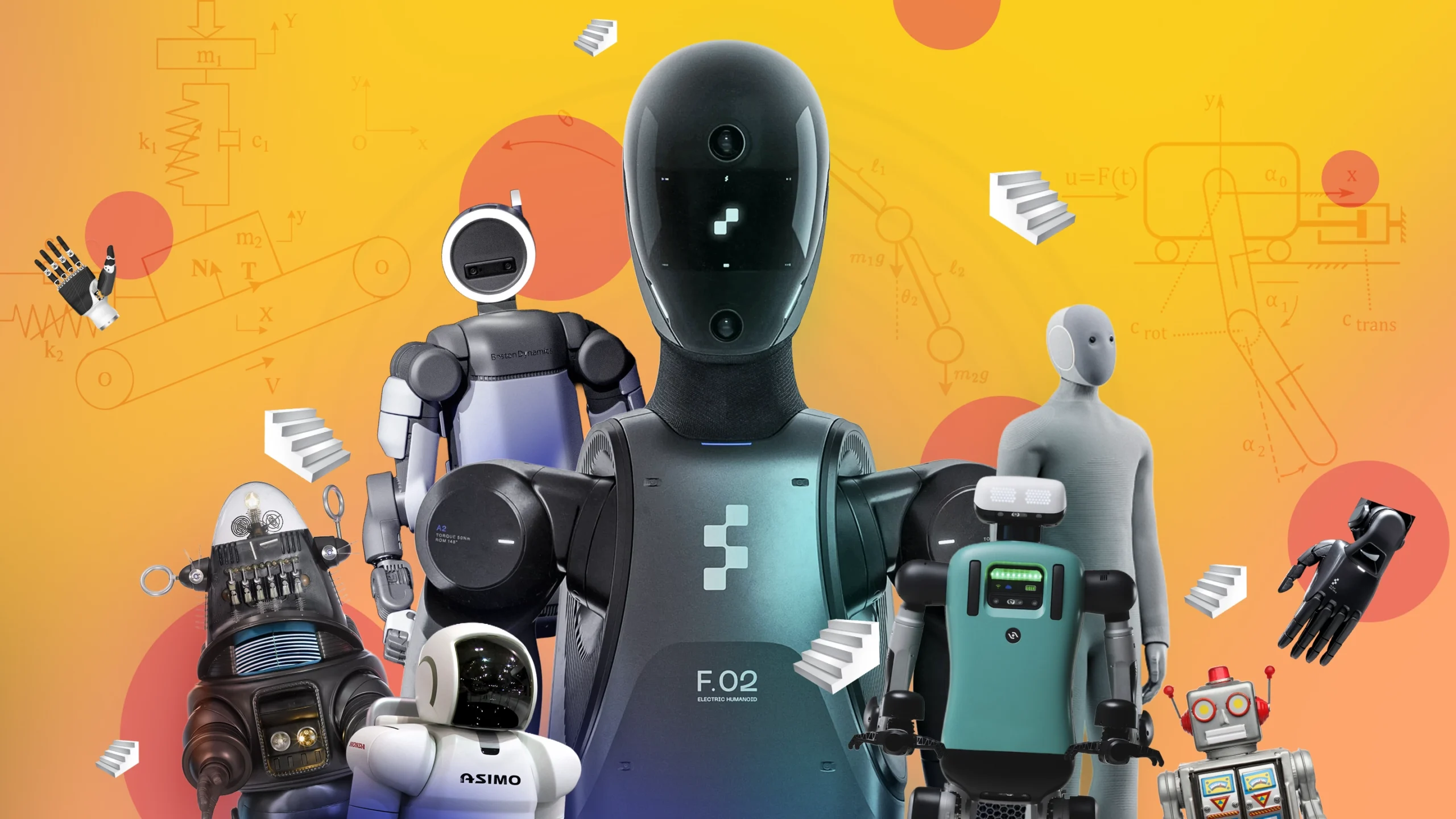
Even so, Tech Hopes are increasingly focused on whether advances in AI and robotics can make multipurpose machines more useful. Improvements in machine learning, compact computing, batteries, motors, and sensor technology could gradually reduce some of the barriers. Rather than immediately replacing human household work, early multipurpose robots may begin with limited tasks before expanding their capabilities.
How Robotic Assistants Could Change Everyday Routines
The biggest impact of household robotics may come from small improvements repeated every day. A machine that handles a routine task can save only a few minutes at a time, but those savings can accumulate over weeks and months. More importantly, automation can reduce the mental effort involved in remembering repetitive responsibilities.
For older adults or people with mobility limitations, robotic assistance could offer additional value. Tasks such as monitoring rooms, retrieving certain lightweight items, or maintaining routine cleaning could become easier with appropriate technology. Families may also use robots as supplementary tools rather than replacements for human care and attention.
In busy households, coordination could become another major advantage. A robot could potentially schedule activities around household routines, avoid interrupting people, and communicate with other connected systems. Tech Hopes therefore go beyond the idea of a machine doing physical work. They increasingly involve creating an environment where technology anticipates routine needs while leaving important decisions under human control.
Challenges That Could Slow Mass Adoption
Despite rapid innovation, several barriers remain. Price is an obvious issue because advanced sensors, motors, processors, cameras, and AI capabilities can increase manufacturing costs. Consumers may hesitate to purchase expensive robots if the machines provide only limited functionality.
Another challenge is maintenance. A sophisticated household robot has many physical and software components that can require updates, repairs, replacement parts, or technical support. Consumers expect everyday appliances to work reliably for years, so manufacturers will need to address durability as well as innovation.
Privacy and security could become equally important. A robot that can see, hear, move around, and connect to the internet occupies a unique position inside a private environment. Weak security could create serious concerns. Manufacturers will need to build strong protections into both hardware and software rather than treating cybersecurity as an optional feature.
There is also the question of human expectations. Marketing can make robotic assistants appear more capable than they are in real household conditions. Clear communication about limitations will be important for building long-term trust. Tech Hopes will have greater value when they are supported by practical performance rather than futuristic promises alone.
What the Future of Home Automation May Look Like
The future of robotic home assistance is likely to develop gradually rather than arrive through one dramatic breakthrough. Specialized robots may become increasingly capable while software connects them with broader smart-home ecosystems. AI could help these systems understand context, while improved sensors allow them to operate more safely in changing environments.
Over time, consumers may begin to think of household robots less as individual gadgets and more as part of an integrated home infrastructure. A cleaning robot, security system, smart appliance, and personal assistant could potentially share information and coordinate activities. This could create a more responsive home where automation handles repetitive processes while humans remain responsible for meaningful choices.
The most successful systems will probably be those that solve clear problems without becoming complicated to operate. People do not necessarily want technology that requires constant management. They want tools that work quietly, reliably, and predictably. This principle could determine which robotic assistants move from impressive demonstrations into everyday homes.
Conclusion
Robotic home assistants are entering an important stage of development as AI, sensors, computer vision, navigation, and connected devices become more capable. The technology is moving beyond simple automated cleaning toward broader forms of household assistance, personalization, monitoring, and interaction. Although fully autonomous domestic robots are still a developing ambition, current progress demonstrates that machines can already perform useful tasks with increasing independence.