
The Internet of Things has transformed the way physical objects interact with digital systems. From smart buildings and industrial equipment to agricultural sensors and healthcare devices, connected technologies increasingly depend on small sensors that collect information and transmit it to larger networks. Yet one fundamental challenge remains: power. Many IoT devices rely on batteries, and even the smallest battery eventually needs to be replaced, recharged, or responsibly disposed of. As billions of connected devices continue to emerge, finding alternatives to conventional batteries is becoming increasingly important. This is where battery-free IoT technology is attracting growing attention.
Battery-free IoT devices are designed to operate without a traditional onboard battery by collecting small amounts of energy from their surroundings. Depending on the application, that energy may come from sunlight, radio-frequency signals, vibrations, heat differences, or movement. These approaches could allow sensors to operate for extremely long periods with minimal maintenance. For Tech Hopes, the development represents more than an incremental improvement in sensor design. It points toward a future where connected objects can become smaller, more sustainable, and easier to deploy across environments where replacing batteries is difficult or expensive.
Why Battery-Free IoT Is Becoming Important
Traditional IoT deployments often look simple from the outside. A sensor collects information, processes it, and communicates with another device or cloud platform. Behind that process, however, is a practical power requirement. Sensors installed inside walls, under roads, across agricultural fields, on industrial machinery, or in difficult-to-access locations can become expensive to maintain when their batteries eventually run out.
Battery replacement also becomes a major concern when IoT deployments grow from hundreds of devices to thousands or millions. A business might be able to replace batteries in a small number of sensors, but maintaining a huge distributed network can require substantial labor and logistical planning. Battery-free designs attempt to address this problem by making the surrounding environment part of the device’s energy system.
Energy harvesting technologies can capture tiny amounts of energy that would otherwise go unused. A photovoltaic sensor, for example, can convert available light into electrical power. Another device might capture energy from radio waves or mechanical vibrations. These sources generally produce limited energy, so battery-free IoT systems must be designed around extremely efficient electronics and communication methods.
How Battery-Free IoT Devices Work
A battery-free IoT device typically combines an energy-harvesting component, low-power electronics, a sensor, and a communication mechanism. Instead of storing large quantities of energy in a conventional battery, the system attempts to use harvested energy efficiently as it becomes available. This requires careful coordination between sensing, computing, and communication activities.
The energy source varies according to the environment. Outdoor sensors can benefit from solar energy, while indoor devices may potentially use artificial light or radio-frequency energy. Industrial environments can provide vibration or heat gradients that support specialized harvesting technologies. The important principle is that the device must match its energy strategy to the environment in which it operates.
Communication is another critical part of the equation. Sending wireless data can consume considerably more energy than simply measuring a physical condition. Consequently, battery-free devices often need extremely efficient communication approaches. Some systems may transmit very small amounts of information, while others can rely on nearby infrastructure to provide the energy required for communication.
The Role of Energy Harvesting
Energy harvesting is one of the most important technologies behind the battery-free IoT concept. Rather than depending on a finite stored-energy source, harvesting systems continuously look for usable energy in the surrounding environment. Although the amount of available energy may be tiny, modern semiconductor technology can operate using remarkably small amounts of power.
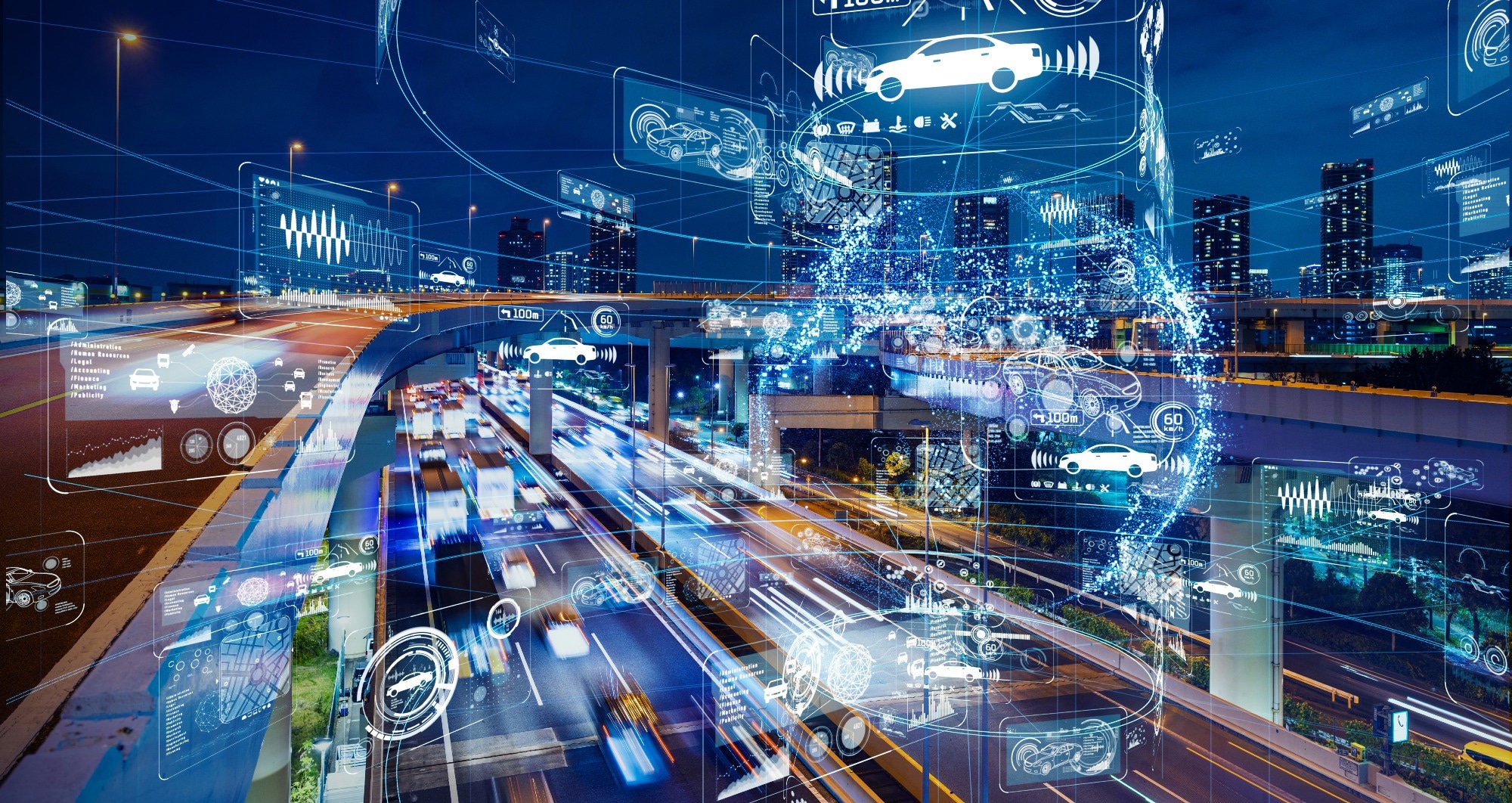
Solar harvesting is particularly attractive because light is widely available in outdoor environments. However, indoor applications create a more complicated situation because illumination levels can be much lower and inconsistent. Radio-frequency harvesting offers another possibility, especially in environments surrounded by wireless signals. Mechanical harvesting can also become useful in places where equipment regularly vibrates or moves.
For Tech Hopes, the significance of energy harvesting lies in how it changes the assumptions behind IoT deployment. Instead of asking how long a battery will last, engineers can increasingly ask whether the environment provides enough energy for a particular sensing and communication workload.
Battery-Free IoT Applications Across Industries
The potential applications extend across numerous sectors. In agriculture, sensors could monitor soil conditions, temperature, humidity, and other environmental factors without requiring frequent battery replacement. Deploying large numbers of low-maintenance sensors could help farmers collect more detailed information about growing conditions while reducing maintenance requirements.
Industrial facilities represent another promising area. Sensors attached to machines could monitor vibration, temperature, pressure, or other operating conditions. Equipment that already generates vibration or heat may provide an opportunity for energy harvesting. In such cases, the machinery itself could indirectly help power the monitoring system.
Smart buildings could also benefit. Battery-free sensors could potentially monitor occupancy, environmental conditions, lighting, or equipment performance. When deployed across large buildings, eliminating or reducing battery maintenance could simplify long-term management.
Healthcare and logistics offer additional possibilities. Small sensors could help track environmental conditions around sensitive products, while wearable or near-body technologies could investigate new ways of collecting energy from movement or body heat. These applications remain technically challenging, but they illustrate why researchers and companies continue exploring the field.
Potential Benefits of Battery-Free IoT
The attraction of battery-free IoT is not limited to convenience. It could also influence the cost, sustainability, size, and deployment flexibility of connected devices.
- Reduced maintenance: Fewer battery replacements could make large sensor networks easier to manage.
- Smaller designs: Removing conventional batteries can create opportunities for more compact devices.
- Longer operational life: Devices may continue working as long as their energy source and electronics remain functional.
- Lower environmental impact: Reducing dependence on disposable batteries could help address electronic waste concerns.
These benefits do not mean batteries will disappear from IoT. Many applications require dependable energy storage or higher power levels that harvesting alone cannot provide. Instead, battery-free technology is likely to become another important design option.
Battery-Free IoT Compared With Conventional IoT
The difference between conventional and battery-free devices is primarily related to how they obtain and manage energy. Conventional IoT devices normally depend on stored electrical energy, while battery-free systems attempt to draw power from their surroundings.
| Feature | Conventional IoT | Battery-Free IoT |
|---|---|---|
| Primary energy source | Battery or rechargeable battery | Environmental energy harvesting |
| Maintenance | Battery replacement or charging may be required | Potentially lower maintenance |
| Device size | Often limited by battery size | Can potentially be smaller |
| Energy availability | Stored and predictable | Depends on environment |
| Suitable applications | Broad range of IoT systems | Low-power sensing and specialized deployments |
This comparison highlights an important point: battery-free technology is not automatically better for every IoT application. Devices that require continuous high-power processing, long-distance communication, or operation in energy-poor environments may still need batteries or other storage solutions.
Challenges That Could Slow Adoption
Despite its potential, battery-free IoT faces significant technical challenges. Energy availability is one of the biggest. A device operating outdoors in bright sunlight may have access to considerably more energy than a sensor installed inside a dark industrial space. Designing systems that continue working when environmental energy fluctuates requires sophisticated power management.
Another challenge is communication reliability. Wireless transmission consumes energy, and battery-free devices have limited energy budgets. Engineers therefore need to balance how frequently a device collects data with how often it communicates. In some cases, a sensor may need to collect information intermittently rather than continuously.
There are also challenges involving cost, standardization, security, and deployment. A battery-free sensor may be inexpensive in large quantities but still require specialized components or infrastructure. Security becomes particularly important when devices are deployed throughout public spaces or industrial networks. The technology must therefore develop alongside broader IoT standards rather than operating as an isolated innovation.
How Edge Computing Could Strengthen Battery-Free Devices
Edge computing could play an important role in making battery-free IoT more practical. Instead of sending every piece of raw sensor data to a remote cloud platform, an edge device can process information closer to where it is collected. This can reduce communication requirements and potentially lower the energy needed by individual sensors.

For example, a sensor monitoring machinery does not necessarily need to transmit every minor measurement. An edge system could identify an unusual vibration pattern and request more detailed information only when something appears abnormal. This approach could make limited harvested energy much more useful.
This relationship between energy-efficient sensors and local computing is particularly interesting for Tech Hopes because the future of IoT may depend less on making individual devices more powerful and more on making entire systems smarter about how they use energy.
The Future of Battery-Free Connectivity
The next stage of battery-free IoT will likely involve improvements in several technologies at the same time. More efficient semiconductor components can reduce the amount of energy required for sensing and processing. Better energy harvesters can capture smaller environmental energy sources, while improved wireless protocols can reduce the power needed to communicate.
Artificial intelligence could also influence the development of these devices. Tiny machine-learning models may eventually allow sensors to identify important events locally without continuously transmitting data. Instead of functioning as simple measurement tools, future battery-free devices could become selective, intelligent nodes that communicate only when their observations matter.
This could lead to a different vision of connected infrastructure. Rather than installing a relatively small number of powerful devices that require regular maintenance, organizations could potentially deploy large numbers of tiny sensors throughout buildings, machines, products, and environments. Tech Hopes sees this broader shift as an important part of the evolution from traditional connected devices toward more autonomous and environmentally responsive networks.
What Battery-Free IoT Could Mean for Sustainability
Sustainability is becoming increasingly important as the number of connected devices expands. Every sensor requires materials, manufacturing energy, transportation, and eventually disposal. Batteries add another layer of environmental considerations because they contain materials that must be managed responsibly at the end of their useful lives.
Battery-free designs cannot eliminate the environmental footprint of electronics, but they could reduce one major source of waste and maintenance. If devices can operate for long periods using ambient energy, organizations may need fewer battery replacement cycles. Over large deployments, even modest reductions in battery use could become meaningful.
However, sustainability should be evaluated across the entire product lifecycle. Manufacturing specialized energy-harvesting components can also require resources. The most environmentally responsible solutions will therefore depend on factors such as device longevity, manufacturing processes, repairability, recycling, and actual energy consumption. Tech Hopes points toward this broader lifecycle perspective rather than treating battery-free technology as a single solution to every sustainability challenge.
The Road Ahead for Connected Devices
Battery-free IoT is still developing, and practical limitations will determine where it becomes commercially successful. The technology is particularly promising for applications involving extremely low-power sensing, difficult-to-access locations, and large numbers of distributed devices. As components become more efficient, applications that once seemed impractical could become increasingly realistic.
The most important change may be conceptual. IoT designers have traditionally started with the assumption that a device needs a battery. Battery-free systems challenge that assumption by asking whether the device can instead take advantage of energy already present around it. That shift could inspire new product designs and entirely new approaches to connected infrastructure.
Conclusion
Battery-free IoT devices could become an important part of the next generation of connected technology. By combining energy harvesting, ultra-low-power electronics, efficient wireless communication, and increasingly capable edge computing, these devices could reduce maintenance requirements while enabling sensors to operate in places where conventional batteries are inconvenient. The technology still faces limitations involving energy availability, reliability, communication, security, cost, and scalability. Nevertheless, the direction is significant. As organizations search for more sustainable and easier-to-maintain connected systems, battery-free designs may move from specialized experiments toward practical commercial applications. Tech Hopes for the future of connectivity increasingly involve devices that are not simply connected, but also energy-aware, autonomous, and capable of adapting to their surroundings. If these technologies continue to mature, the IoT landscape could become smaller, smarter, and considerably more persistent than it is today.

.jpg&description=Battery-free IoT devices are changing connected technology with energy harvesting, smaller sensors, and smarter networks that could shape the future.)