Connected technology has moved far beyond smartphones and computers. Today, vehicles, industrial machines, security systems, healthcare devices, retail equipment, smart buildings, and household products can continuously collect and exchange information. As the number of connected devices grows, organizations increasingly need ways to process information quickly without depending entirely on distant cloud data centers. This is where edge computing is becoming an important part of modern digital infrastructure. By moving computing resources closer to where information is generated, edge technology can support faster responses and more efficient connected services. Tech Hopes reflects the broader technology discussion around innovations that make digital experiences more responsive, practical, and adaptable.
Traditional cloud computing remains essential for large-scale storage, analytics, application management, and centralized operations. However, sending every piece of information to a remote data center can introduce delays, consume network bandwidth, and create challenges for applications that require immediate decisions. Edge computing addresses part of this challenge by allowing data to be analyzed closer to the source. A connected camera, factory machine, vehicle, or sensor can perform certain processing tasks locally or through a nearby edge server before sending selected information to a central cloud environment. This combination of edge and cloud computing is helping businesses build connected services that can respond more efficiently to real-world events.
What Is Edge Computing and Why Does It Matter?
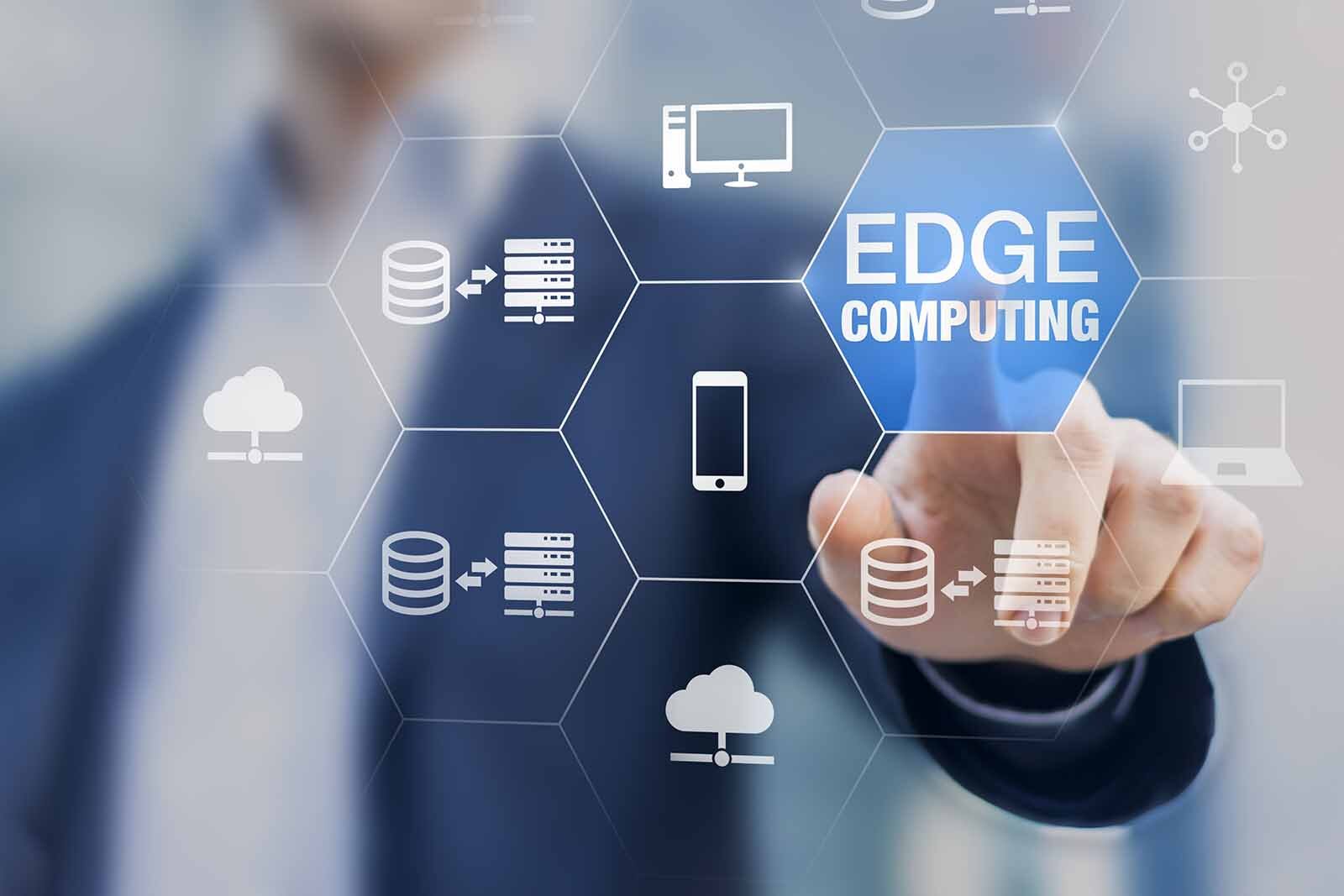
Edge computing is a distributed approach to computing in which processing and storage capabilities are placed closer to devices, users, sensors, and other sources of data. Instead of requiring every request to travel to a centralized cloud location, some workloads can be handled at an edge device, gateway, local server, telecommunications facility, or another nearby computing point. The goal is not necessarily to replace cloud computing. Instead, edge computing works alongside cloud infrastructure, allowing organizations to decide where different types of workloads should be processed.
This architecture becomes especially valuable when applications require rapid responses. Consider a connected manufacturing system that monitors equipment for unusual vibration or temperature changes. If every sensor reading must travel to a distant cloud platform before a response is generated, the process may involve unnecessary network traffic and additional latency. An edge system can examine important information locally and identify potential problems almost immediately. The cloud can then receive relevant information for long-term analysis, reporting, and machine-learning workloads. This distributed approach demonstrates why Tech Hopes can be associated with the growing importance of practical computing architectures that connect speed, automation, and intelligence.
How Edge Computing Makes Connected Services Faster
One of the biggest advantages of edge computing is reduced latency. Latency refers to the time required for information to travel between a device and the system processing it. For ordinary applications, a small delay may not matter. However, connected services involving industrial automation, interactive applications, traffic management, security monitoring, or real-time equipment control can benefit significantly from faster processing.
When data is processed closer to its source, fewer communications need to travel across long network routes. This can make certain services more responsive and reduce dependence on continuous communication with a distant cloud location. A smart retail system, for example, might analyze inventory information through local computing resources while synchronizing broader business data with a centralized platform. Similarly, a connected transportation system can process selected information near vehicles or roadside infrastructure before sending aggregated information to a central service.
Reducing Network Traffic
Edge computing can also reduce the amount of raw information that must travel across a network. Modern sensors and connected devices can generate enormous quantities of information, much of which may not need to be stored permanently. Instead of transmitting every data point to the cloud, an edge system can filter, organize, summarize, or analyze information locally.
For example, a video monitoring system may generate continuous footage, but an organization might only need alerts when particular events occur. Local processing can identify relevant activity and transmit selected information instead of constantly sending an entire high-resolution stream to a remote server. This can reduce bandwidth pressure and potentially improve the overall efficiency of connected infrastructure.
Edge Computing Across Different Industries
The use of edge computing is expanding because different industries have different requirements for speed, reliability, privacy, and data management. Manufacturing is one area where edge technology can support real-time monitoring and automation. Sensors connected to production equipment can collect information about temperature, pressure, vibration, and operating conditions. Nearby computing systems can analyze these signals and help identify abnormal behavior before it becomes a larger operational issue.
Healthcare is another area where connected technologies can generate valuable information. Medical devices and monitoring systems may need to handle information quickly while organizations maintain appropriate security and privacy practices. Edge processing can support certain local analysis tasks, while centralized platforms remain useful for broader records, research, analytics, and administrative systems. Retail, logistics, agriculture, telecommunications, and smart-city infrastructure can similarly benefit from processing information closer to where it is created.
| Industry | Example Edge Computing Use | Potential Benefit |
|---|---|---|
| Manufacturing | Equipment monitoring and automation | Faster operational responses |
| Healthcare | Connected monitoring devices | Local processing of selected data |
| Retail | Smart inventory and customer systems | Responsive store operations |
| Transportation | Vehicle and traffic systems | Lower-latency decision support |
| Agriculture | Field sensors and equipment | More timely environmental analysis |
The Role of Edge Computing in IoT Growth
The Internet of Things has created an environment in which physical objects can collect information, communicate with software platforms, and sometimes act on instructions. From connected thermostats to industrial sensors, IoT devices continue to expand the volume and variety of information produced outside traditional computing environments. Edge computing provides an architectural solution for handling some of this information near the point where it originates.
This is particularly useful when IoT systems operate in locations where network connectivity may be limited, expensive, or inconsistent. An edge device can continue performing selected functions locally rather than depending completely on a permanent connection to a remote cloud service. Once connectivity becomes available, important information can be synchronized with centralized systems. This capability can make connected applications more resilient and practical in environments ranging from warehouses and farms to remote industrial facilities. Tech Hopes highlights this type of technological development because the value of connected technology increasingly depends on how efficiently devices can turn collected information into useful actions.
Edge and Cloud Computing Work Together
It is easy to view edge computing and cloud computing as competing approaches, but modern infrastructure is increasingly based on using both. Cloud platforms provide enormous advantages for centralized data storage, application hosting, large-scale analytics, artificial intelligence development, backup, and organization-wide management. Edge computing complements those capabilities by handling selected workloads closer to users and devices.
A connected organization might therefore use a hybrid architecture. Sensors could collect information and send it to an edge gateway, where urgent processing occurs. Important results could then be forwarded to a cloud platform for historical analysis. Managers could access dashboards from a centralized application, while machine-learning systems could study larger datasets to identify long-term patterns. This division of responsibilities can allow each environment to perform the tasks for which it is best suited.
Why Local Processing Can Be Valuable
Local processing becomes especially important when an application needs a quick response or handles substantial quantities of information. Several characteristics make edge architecture useful:
- Faster responses for latency-sensitive applications.
- Reduced transmission of unnecessary raw data.
- Greater operational flexibility in distributed environments.
- Continued local functionality during certain connectivity interruptions.
- More opportunities to keep selected information closer to its source.
These advantages do not mean every workload should move to the edge. Organizations must evaluate cost, security, management complexity, computing requirements, and the nature of their applications before deciding which workloads belong locally and which should remain centralized.
Security and Privacy Considerations
Moving computing closer to devices can provide operational benefits, but it also creates new security responsibilities. A traditional centralized environment may have fewer major computing locations to manage, while an edge architecture can involve numerous devices, gateways, servers, and network connections. Each additional endpoint may represent another component that requires appropriate protection, monitoring, software updates, authentication, and access controls.
Privacy is also an important consideration when connected systems process sensitive information. Local processing may reduce the need to transmit certain raw data across a network, but organizations still need strong governance around what is collected, processed, stored, and shared. Effective edge deployments therefore require security to be designed into the architecture rather than treated as an afterthought. Device identity, encryption, secure software updates, network segmentation, access management, and continuous monitoring can all contribute to a stronger environment.
Edge Computing and Artificial Intelligence
Artificial intelligence is increasing the demand for faster and more distributed processing. Many AI applications depend on large amounts of information generated by cameras, sensors, machines, vehicles, and other connected systems. Sending every piece of information to a centralized location may not always be practical. Edge AI allows selected AI models or inference workloads to operate closer to the data source.
For instance, a camera-based system could analyze visual information locally and identify predefined events without continuously transmitting every video frame to a remote platform. A machine could similarly use a locally deployed model to detect unusual operating conditions. More demanding training and large-scale model management can remain in centralized cloud environments. This combination allows AI systems to use both distributed processing and centralized computing resources.
The development of more capable processors, specialized AI hardware, improved networking, and compact machine-learning models is likely to make edge-based intelligence increasingly practical. Tech Hopes connects with this broader movement toward computing that is not only powerful but also positioned where its results are most useful.
The Importance of 5G and Modern Connectivity
Advanced connectivity technologies can further strengthen edge computing. Faster networks and improved network responsiveness can help connect edge locations, devices, and cloud platforms more effectively. In environments with large numbers of connected devices, modern cellular and wireless infrastructure can support communication between distributed systems while edge computing handles selected processing tasks.
This relationship is particularly relevant for applications that combine mobility, sensors, and real-time information. Connected transportation, industrial environments, smart infrastructure, and immersive digital services can all require communication and processing to happen within short timeframes. The exact benefits depend on network design, device capabilities, application requirements, and deployment conditions, but the combination of advanced connectivity and edge infrastructure represents an important direction for connected computing.
Challenges Businesses Need to Consider
Despite its potential, edge computing is not a simple plug-and-play solution. Managing distributed computing resources can require new technical skills, monitoring systems, security processes, and maintenance strategies. Organizations may need to manage hardware across numerous physical locations rather than maintaining computing resources primarily within centralized facilities.
Cost is another consideration. Deploying edge infrastructure can involve hardware purchases, installation, software management, connectivity expenses, security investments, and ongoing maintenance. Businesses therefore need a clear understanding of the problem they are trying to solve. Edge computing can be particularly useful when low latency, local processing, bandwidth efficiency, or operational resilience provides measurable value. In other situations, centralized cloud processing may remain simpler and more economical.
What the Future Holds for Connected Services
The future of connected services is likely to involve increasingly distributed computing architectures. Rather than placing all processing in one environment, organizations can divide workloads across devices, edge locations, private infrastructure, telecommunications networks, and cloud platforms. This approach can provide greater flexibility as applications become more data-intensive and responsive.
As AI becomes more integrated into connected products and industrial systems, the importance of processing information close to its source may increase. Smaller and more efficient AI models, improved processors, better connectivity, and stronger device-management technologies can help expand practical edge deployments. Businesses will still need to balance performance with security, cost, reliability, and governance. The most useful solutions will likely be those that apply edge computing where it solves a genuine operational problem rather than using the technology simply because it is new.
Conclusion
Edge computing is changing how organizations think about connected services by bringing selected processing capabilities closer to the devices and environments generating information. Its ability to reduce certain forms of latency, limit unnecessary data movement, support local decision-making, and complement cloud platforms makes it relevant to a wide range of digital applications. From manufacturing and transportation to retail, healthcare, agriculture, and smart infrastructure, the technology can provide a foundation for more responsive connected environments.